



The human imagination gazes upon infinite possibilities. In this gaze, it may, if directed upwards, be filled with the vision of God, and so be receptive. Or it may look upon the world and recognize in it the created potential for making, and so actively mold the world. In The Cultivating Imagination, we will explore this nexus. On the one hand, these reflections aim to facilitate our openness to the sweet influence of divine grace raining down upon us. On the other, they are directed at the ways we work the land (of our world, societies, families, and hearts) to create desire paths that allow grace to more effectively water the land. In these two ways, the imagination fulfills the twin duties of love to God and neighbor.

I’ve been hurt before. I mean really hurt. Deeply, profoundly, personally; as if the other had set out to do me the greatest harm they could think to do. Now, to be sure, the ways in which I have hurt others exceed the ways in which I have been hurt; of that I have no question. And the shame of my own transgressions does, for me at least, in some way mitigate the force of transgressions against me: for even though I may not have merited this particular hurt, no hurt can truly feel undeserved. I know I deserve much worse. But even as my sense of my own sinfulness weakens the scandal of being sinned against, there is a residue that burns, sears, rankles.
I say this not to awaken your pity, but to assure you that the words I have to say are not spoken lightly or without an awareness of how incredibly difficult they are to put into action. I know what it’s like to not want to forgive, to feel justified in not forgiving, to think that not to forgive is in some sense a Christian duty.
After all, we reason with ourselves, the Lord Himself doesn’t simply forgive. He first teaches us to know that we have done wrong; in like manner, we feel that it is important that the one who has wronged us know it. “They need to understand how they have hurt me,” we say. And the Lord requires that we be sorry for it, and even confess it (though among many Christian communities we are too loose with the biblical command to confess our sins to one another). Therefore we rightly expect the ones who need our forgiveness to feel sorry for what they did to us, and to admit that they did it, and that what they did was wrong. And the Lord desires that we seek His forgiveness, that we come to Him in supplication and ask for His mercy. So also we do not feel held to forgive when the other person has shown no signs of desiring that forgiveness.
These are all good points. And yet there is one thing that stands in the way of the easy acceptance of the theology of forgiveness marked out by this account: the broken God-man on the cross. I’m going to ask us to hold that image in our minds throughout the reflections that follow. This is absolutely critical, because it is the cross that is ground zero of the theology of forgiveness; not the Pauline epistles describing how individuals make their way to that forgiveness after the fact, and not our own sense of what is right, just, or fair.
At the midpoint of history, the world and space-time itself are bisected by a cross on which He in whom all is summed up suffered a pain that is, in a truer sense than we know, every pain that has ever been suffered. We must be willing to be ashamed of any doctrine of forgiveness that we would be ashamed to speak to Him as He is in the depths of His agony of forgiveness.
So let’s revisit what seemed so clear a moment ago. When Christ died on that cross, the world did not know its sin. Neither those standing around the cross jeering at Him nor any of us who have since been summoned to that moment as the central crisis of our existence came because we were driven there by the inexorable and inevitable conviction of our utter failure. Or, more correctly, even those of us who were driven there out of despair of our own works found an already crucified God-man. Before the conviction ever overtook us, before the shame ever overwhelmed us, before the guilt ever undid us, He was already on the cross. He did not wait for us to be aware before doing the act that itself constitutes the forgiveness of God.
In like manner we were not sorry for our sin and we had not admitted that we had sinned. This is the particular scandal of forgiveness that is only really viewable by those who have approached it from the standpoint of the one in desperate and ultimate need of forgiveness: That it was offered incalculably before the offense was given. The shame that comes with conviction of sin asks the question: “Can this be forgiven? Can even an infinite God remit this without becoming a God of injustice?” And this question always finds its answer in the knowledge that it was forgiven before the foundation of the world. Christ did not only die for us before we were sorry for our sin; He died for us before we were aware of how bad our sin is, before we had descended into the depths of certain knowledge of its depravity that threatens our very sense of self. He died for us before we were willing to be forgiven, because we still cling to some (ultimately Pelagian) notion that we ought to suffer a certain amount before it is right that we be forgiven.
And this leads directly into the last point, which is that He died for us and forgave us before we asked. When we bring Him the question of whether our particular sin can ever be forgiven, He says: “I have already told you ‘yes.’” And with that, the Christian doctrine of forgiveness takes on its starkest, most shocking, and most difficult form:
That forgiveness, if it is to be divine or in proper participation with the divine, must be willing to be unearned, unasked, and undeserved.
You see, when we are wronged, we tend to look at forgiveness differently. We take the question of our own sinfulness out of it, because we didn’t do anything wrong. We stand justified in our own eyes, and from that place we speak as we imagine God could speak if God so desired: a place from which no action of forgiveness is required until some motion of contrition has been detected on the part of the wrongdoer. But this is precisely what Christ warned us against in His oft-repeated injunctions against judging others, and in that most difficult line of the Lord’s Prayer that asks God to forgive our trespasses just to the extent that we forgive the trespasses of others (an almost literal rendering of the Greek). Yes, God could choose to act this way; God could decide that no least motion of grace towards us would begin until we had understood what we have done, been truly and dutifully sorry, admitted it, and sought His forgiveness. But that is not the path that God chose; that is not the path of the cross. If it were, who could stand?
Unforgiveness is a kind of hatred. This can be hard to see because it masquerades as a love of justice. It argues that there is an objectively right way for things to be in the world, and that reconciliation should not happen until certain things have been set to rights. But in clinging to a justice that is not penetrated in its every fiber by mercy, it departs from the divine justice, and therefore from the very notion of justice. Because justice is not cold, objective, nor blind; justice is warm, invested, and compassionate. When we withhold our forgiveness from our enemy (even if that enemy should be spouse or friend or child), we fail to view them with pity for the great harm that the great evil they have committed against us is within their own soul. Our hearts are so broken for ourselves that we fail to let them be broken for our enemy. We desire not their good, but their suffering; this is the very logic of hate.
And so I find that I have to say the very unpopular thing: as Christians, we are held to forgive. Not when the person in need of our forgiveness has come to understand how badly they behaved, or has been wracked by guilt and shame, or has come seeking reconciliation; no, our obligation to forgive is based only in the other person’s need for forgiveness, which arises at the very moment they become guilty. I know that this is a hard saying. But, try as I might, I cannot succeed in hearing the Lord on the cross saying anything else.
“But what if they are not truly sorry?” Forgive. “But what if they are still actively plotting to harm me?” Forgive. “But what if, by forgiving, I open myself to getting hurt again?” Seventy times seven. This is the syllogism of God against the sophistry of unforgiveness. We gain nothing by refusing to forgive the one God has forgiven; but we risk everything.
This will hurt. In this world we will have trouble. But take heart: for this was how He overcame the world.

The featured image, “Exhale,” is courtesy of Julie Jablonski and is used with her kind permission for Cultivating.
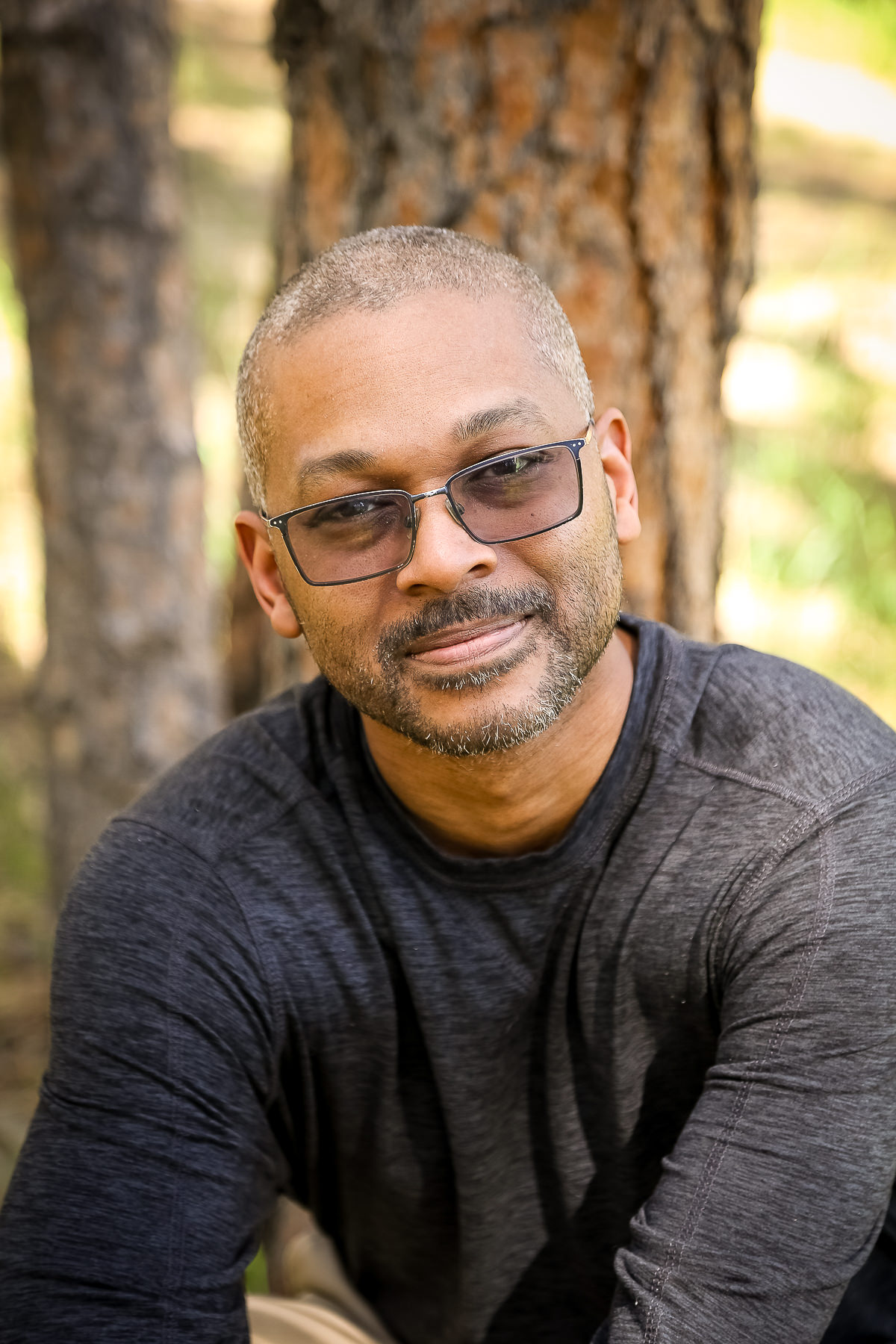
Junius Johnson is a scholar in the fields of historical and philosophical theology and has published four books in those areas. He is also a lover of story, passionate about beauty and the imagination, a seeker of wonder, a musician, and a deeply flawed sinner daily leaning on the grace of God in Christ. A lover of the Middle Ages, he especially loves to be transported to other worlds via fantasy, science fiction, and young adult literature. He teaches online enrichment courses for both children and adults in literature, theology, and Latin through Junius Johnson Academics.

Add a comment
0 Comments