


T
here is a geranium on my front porch that is such a bright orange it’s almost red. It is my very small, very tightly budgeted beginning of a potted garden. The larger garden lives only in my dreams and in the two books about container gardening I gleaned with rewards points on ThriftBooks.
Already the nearly red little flower is fulfilling its intended geranium life. It is a splash of brightness against all the woodgrain of the house siding: It sends its scent wafting towards me on fragrant evenings when I climb the porch stairs. It feeds hummingbirds that come with needle-like spears of beaks, hungry for the sweetness in the blossoms. When I pluck away the stems that have nearly finished blooming, I tuck them into bud vases—even as the flowers die, they pour out bright color one last time.
Sometimes I want to forgive the geranium for not being the whole fulfillment of my container-garden dreams. I come outside to read a book and find myself lost in daydreams of the floral abundance that could be overflowing in the southeast corner of the porch. And then I glance over at the hearty little geranium lighting up the table next to me and think it’s OK that you’re just a little geranium. I suppose you can’t help it. But this is not forgiveness—it is arrogance.
The geranium lends beauty and sweetness and lives, as well as it can in a sin-torn world, the life that a geranium was meant to live since those eons ago in Eden. I can’t say the same of myself.
All things considered, I’d rather offer forgiveness than receive it. Offering forgiveness is bright red, the dripping wound for which you hold no resentment. It is a gift, a spear in the side with no retaliation. Resentment is laid in the grave with no resurrection in mind.

I remember the first time I yelled at my son. He couldn’t have been more than two, maybe not even. The perfect age for pushing me past my patience, which pregnancy had shortened significantly. Also, apparently, the perfect age to forgive.
Not five minutes after I had raised my voice trying to get his shoes on (or some such), I pulled the car over to the side of the street so I could adjust the mirror and look him in the eye.
“I’m sorry, buddy. I shouldn’t have yelled. Will you forgive me?” He was so young I wasn’t sure he’d even understand all the words, but I gave him a full apology anyway—it seemed there was nothing else I could do.
“Yes Mommy.” He looked at me in the mirror with nothing but trust in his eyes and then turned back to the window. I began to cry. I wanted to wallow. To be blamed. To see a little tiny bit of anger in his eyes before he let it go. But he was already looking for the bright shapes of flowers in the narrow lawns and gardens of our neighbors. I shifted the car back into drive and tried to blink back tears.
Seven years later he is still nearly that quick to forgive. I am less quick to forgive myself. I would rather be the one spilling the colors of hurt and grief, bright as a red geranium. I would rather not have to face the ugliness of myself when my words are sharp enough to cut. It is as if I stand at the cross and stare amazed at Jesus’s body dripping blood and water, my palms tingling rebuke from the feel of the hefted spear.
But God did not enter the world as an infant in blood and water only to save us from crimson-stained forgiveness. He came to save us with forgiveness. It is blood that saves us—the blood we spilled is our redemption. All that is left for us to do is receive the tender forgiveness offered more quickly than from a toddler in the back seat with trusting eyes.
In The Brothers Karamazov, the elder Zosima tells a story of his brother when they were both young. As his brother Markel is dying, his eyes are suddenly opened to see God in the world, and he begins to beg for forgiveness—from his family, his servants, even the birds in the trees outside his window. Markel does not ask the birds outside his window to be other than they are, and he does not attempt to forgive them—it is the reverse: “Birds of God, joyful birds, you, too, must forgive me, because I have also sinned before you.” [1] One day he cries out:
I am weeping from gladness, not from grief; I want to be guilty before them … for I do not even know how to love them. Let me be sinful before everyone, but so that everyone will forgive me, and that is paradise. Am I not in paradise now? [2]
Markel’s sight has been baptized; the crimson that cleanses has made him finally able to see. Earlier he had been as distant and arrogant as anyone who thinks they can forgive and excuse the world around them. Distant and arrogant as me. Now he is humble, and he is happy. I had heard this passage of Dostoyevsky’s before but not until last summer did I read it for myself. The geranium sat next to me as I read, lifting its aroma and offering nectar to the hummingbirds that buzzed by.
And in that moment, I am offered the same forgiveness Markel begged. The flower gives itself brightly to the world, songbirds offer their worshipful warbles to my ears as clearly as God’s. Moment by moment, I am given humility and with it, happiness.
Forgiveness is a soft word, a word that rolls out of my mouth light as birdsong in a garden, as if it could float featherlike away on the breeze. But the word belies the act. Forgiveness is more red than my geranium and pierced with sharper spears than what a hummingbird has. Forgiveness was tucked into a tomb, blood and water poured out in a death on display like a flower in a bud vase.
Forgiveness does not spill out lightly; forgiveness rolls like the immoveable boulder heaved aside on Easter morning: it is as weighty as birdsong in a garden, as a geranium so orange it’s nearly red.

[1] The Brothers Karamazov, by Fyodor Dostoyevsky, translated by Richard Pevear and Larissa Volokhonsky.
[2] Ibid.
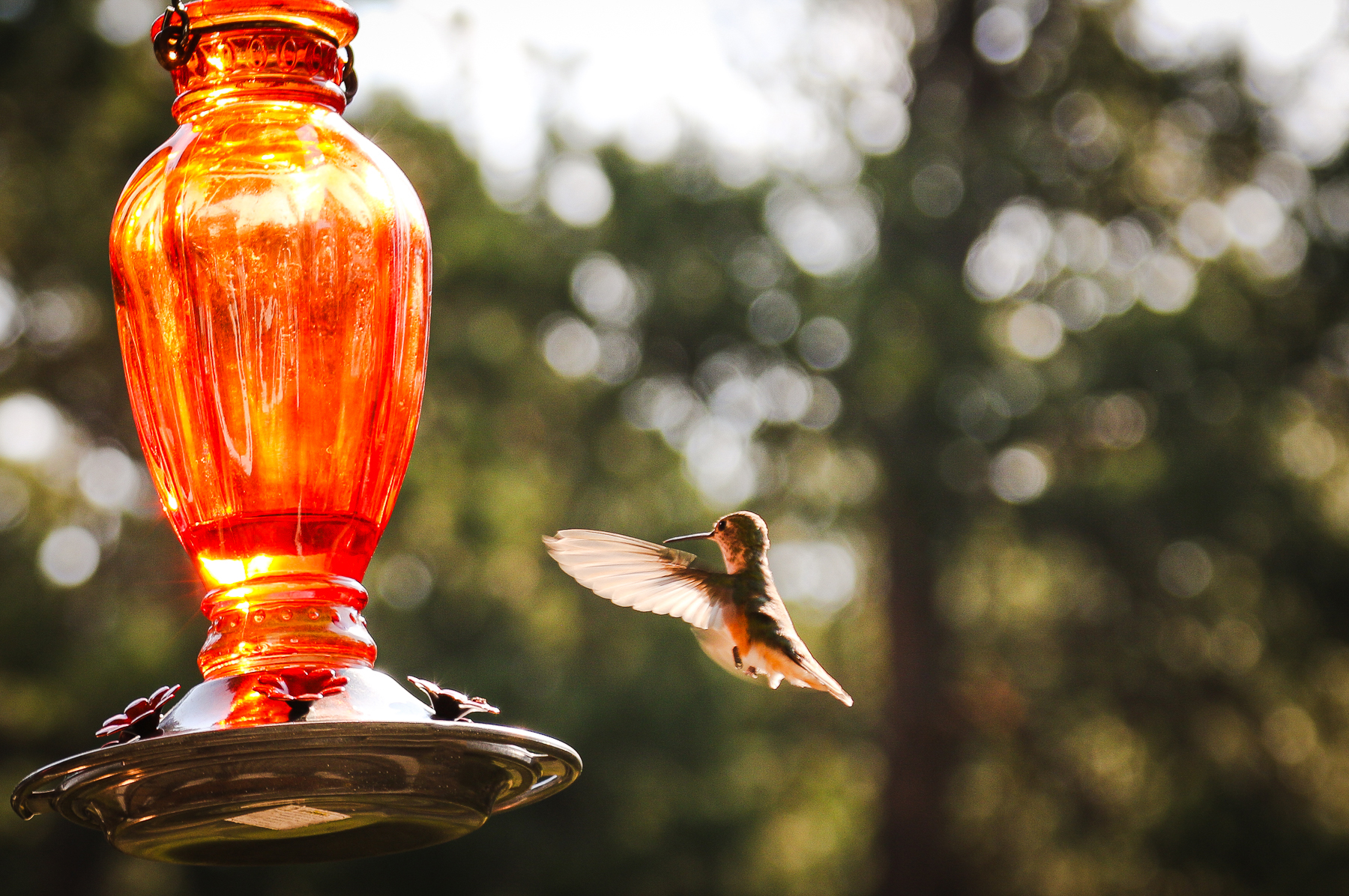
The featured image, “Dancing Wings in Autumn Light,” is courtesy of Lancia E. Smith and is used with her glad permission for Cultivating.

Gianna Soderstrom is a contributing writer for Cultivating Magazine and the Anselm Society, and she serves as Assistant Director of the Anselm Society Arts Guild. Adventure-hearted, but also a connoisseur of cozy, book-ish evenings. She is equally fascinated and challenged by the myriad ways that small and steady faithfulness transform a strange place into a home. She is a working writer and editor, co-laborer in ministry; a dreamer, wife to Grant, mama to E1 and E2, and more than the sum of her parts, just like you. Gianna is currently at work on her first full-length book, due out in 2026-27.

Add a comment
0 Comments