



Why are we encouraged to sing psalms, hymns, and spiritual songs to ourselves and with others? In this column, Cultivating Songs of Faith, we explore that question by looking at one particular hymn each season, offering the story of its creation from the life of its author or composer. What you see here is a reflection rather than a formal academic history. I hope to help you to taste, see, and rediscover what is good in great hymns, and also occasionally enter into the conversation they have with ancient psalms and modern spiritual songs.

Forgive us our sins as we forgive those who sin against us . . . .
Forgiveness is a pretty important idea in God’s eyes. He shines a spotlight on this right in the middle of the prayer that Jesus taught His disciples, one that is prayed daily by Christians the world over. The Lord’s Prayer ties our forgiveness of others with God’s promise to forgive us. Each time I say these words I pause.
I can still remember quite vividly the time when I, at the age of about seven or eight, picked up a package of gum at the grocery store and put it in my pocket without asking. The instant I did this, I felt something like a black stain spreading in my heart. It grew larger and blacker with each step that I took walking out of the store. I knew something was definitely wrong, and it was wrong in large proportion, much larger than the value of a package of gum.
This may seem like a very minor offense, but it made me painfully aware of a side of myself that I hadn’t seen before. By the time I got home I was overwhelmed by an inner turmoil. I hated that gum in my pocket and longed to get rid of it. The feelings of shame that rose up in my heart tortured me. The thought of returning it to the store would require a confession to my mother. The idea of simply chewing it was disgusting. All the enjoyment that tempted me when I picked it off the shelf was completely gone and in its place was hot shame and embarrassment. Before I could sleep that night I had thrown it in the trash and prayed for forgiveness. I earnestly asked God to take away the feeling of disgrace that I felt I could never free myself from.
Can you remember the instance that first alerted you to your need for forgiveness? As I tell this story now, I realize that it isn’t the act of stealing that remains with me, it is the memory of my inability to wash my heart clean from the stain. Would God’s love and mercy be enough to do what I knew I couldn’t do myself? Maybe the hardest person to forgive is oneself.
Come, ye sinners, poor and needy,
weak and wounded, sick and sore;
Jesus ready stands to save you,
full of pity, love, and pow’r.
These words come from Joseph Hart (c. 1711–1768), a Londoner who wrestled deeply with temptation and turmoil of conscience. At the age of forty-six he was greatly influenced by the ministry of George Whitefield and just two years later wrote the hymn “Come Ye Sinners, Poor and Needy.” Hart’s lyrics traveled to America and almost a century later were paired with the haunting “shape note” tune RESTORATION that I sing these lyrics to today. An anonymous author thought the text paired perfectly with the biblical story of the Prodigal Son and later added this refrain:
I will arise and go to Jesus,
He will embrace me in His arms.
In the arms of my dear Savior,
O, there are ten thousand charms.
Just as I felt so keenly as a child, it is precisely when we are aware of our own sin that we are ready to come to Jesus. Once we are faced with the inescapable truth that we cannot fix this black stain ourselves, we reach out to God. We ask Him for forgiveness, believing that Jesus is there to embrace us, and that this is the only answer for the “sick and sore” heart we are holding. One of my favorite lines from this hymn says simply:
If you tarry ’til you’re better,
you will never come at all.
Almost a century after Joseph Hart wrote “Come Ye Sinners,” another writer composed a hymn that builds upon this theme. It speaks of the soul finding its true resting place by simply coming to Jesus. Around 1850, Horatius Bonar of Scotland wrote the poem “I Heard the Voice of Jesus Say.”
I heard the voice of Jesus say,
“Come unto Me and rest;
Lay down, thou weary one,
lay down thy head upon My breast.”
I came to Jesus as I was,
weary and worn and sad;
I found in Him a resting place,
and He has made me glad.
I love the way this text is a conversation. The first half of each stanza announces the voice of Jesus offering something to a worn out soul. The second half is an answer, a response from the listener who opens his heart to receive what is on offer. Each time Jesus calls out, He offers rest for the weary, water for the thirsty, and light for the journey.
How does it feel to receive this kind of life-restoring forgiveness? This is the God who offers not just the cancellation of a debt or the cleaning up of our heart, but the restoration of a relationship. It is the invitation of Matthew 11.28-30. “Come to me, all you who are weary and heavy laden and I will give you rest.” The harvest of the seed of forgiveness is the discovery of a life giving stream, a return to true joy, and rest for the soul.
Though these lyrics have appeared with several melodies, the tune KINGSFOLD is perfectly matched to the words. An English country tune originally associated with a folk ballad based on the story of the rich man and Lazarus in Luke 16, it was discovered by the composer Ralph Vaughan Williams in 1904. He was an avid collector of English folk tunes, and when he heard it sung in a pub in Kingsfold, Sussex, he named the tune after the place. However, if you are from Ireland, you might know this tune sung at a faster tempo and named “Star of the County Down.”
The reason I find KINGSFOLD to be the perfect tune for Bonar’s text is because it begins in a minor key, embodying the pleading voice of Jesus. But at the turn of the stanza where the soul responds in answer the harmony turns to a bright and hopeful major chord. The tune illuminates the text and conveys the intimacy and beauty of the words.
As I consider the lavish gift of God’s forgiveness to me and the fact that He is waiting, calling out to me to come and receive it, I am reminded again of the line in The Lord’s Prayer, “forgive us our sins as we forgive those who sin against us.” The gift of forgiveness is on offer, and as we receive, we are to freely give. C. S. Lewis says:
Real forgiveness means looking steadily at the sin, the sin that is left over without any excuse, after all allowances have been made, and seeing it in all its horror, dirt, meanness, and malice, and nevertheless being wholly reconciled to the man who has done it.[1]
This is forgiveness that restores relationships. Lord, give us the grace to continually come to You and find this rest.
I Heard the Voice of Jesus Say
Text: Horatius Bonar (1808-1899)
I heard the voice of Jesus say,
“Come unto Me and rest;
Lay down, thou weary one,
lay down Thy head upon My breast.
”I came to Jesus as I was,
weary and worn and sad;
I found in Him a resting place,
and He has made me glad.
I heard the voice of Jesus say,
“Behold, I freely give
The living water; thirsty one,
stoop down, and drink, and live.
”I came to Jesus, and I drank
of that life giving stream;
My thirst was quenched,
my soul revived, and now I live in Him.
I heard the voice of Jesus say,
“I am this dark world’s Light;
Look unto Me, thy morn shall rise,
and all thy day be bright.”
I looked to Jesus, and I found
in Him my Star, my Sun;
And in that light of life I’ll walk,
till traveling days are done.[2]

[1] From C. S. Lewis’ essay, “On Forgiveness.” Written in 1947, the piece was added to a collection of essays entitled The Weight of Glory after the lead essay of the same name. But “On Forgiveness” may be accessed free online here.
[2]Listen to the Choir of Trinity College Cambridge sing “I Heard the Voice of Jesus Say” here. A tender orchestral accompaniment may be found here.
The featured image, “Evening Rain,” is courtesy of Julie Jablonski and is used with her kind permission for Cultivating.
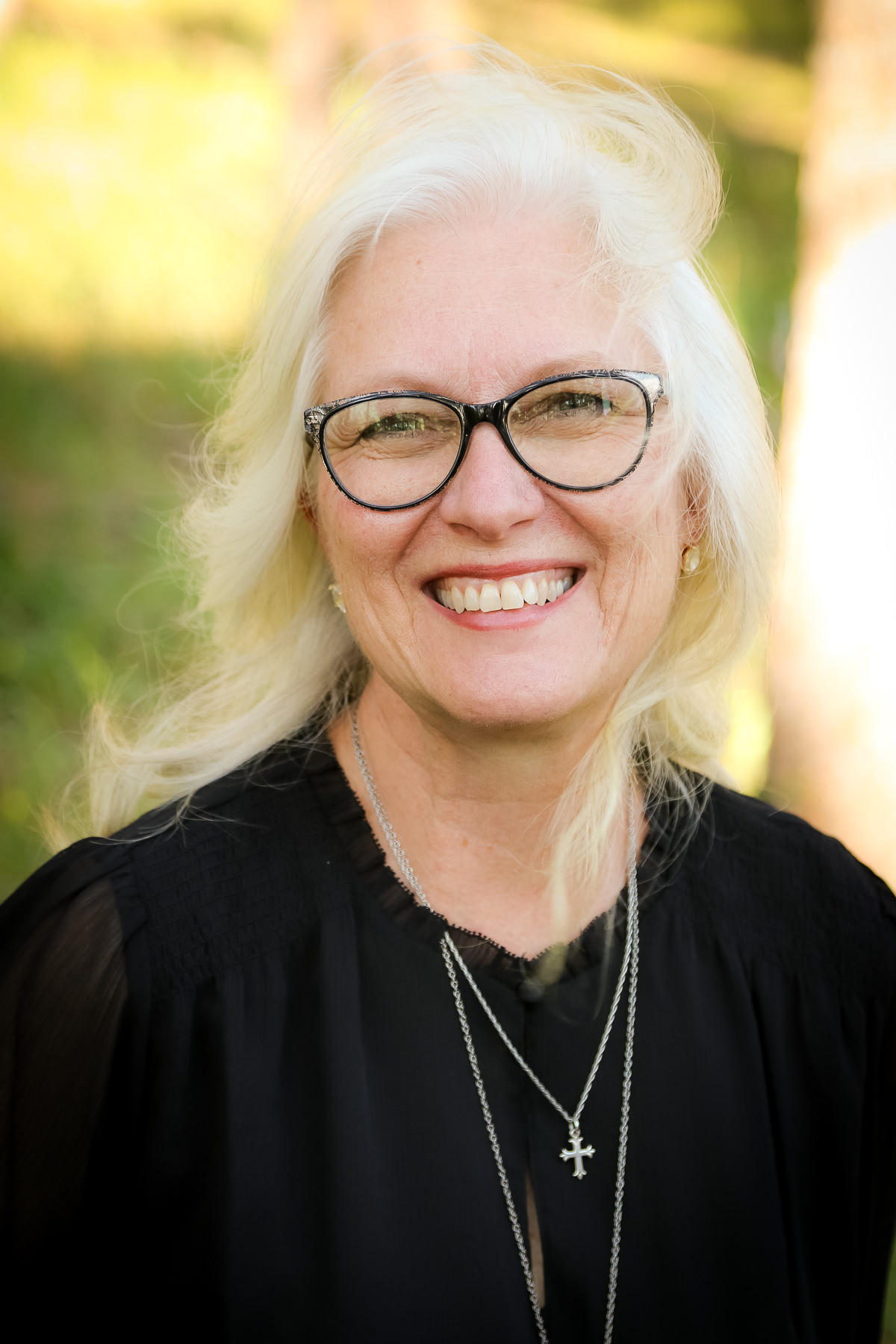
Terri Moon is a musician and a lover of Jesus. She delights in playing the music of Bach, growing English roses, baking up a good batch of scones, and all good, true, and beautiful things that point to Him. She has found that the most fulfilling adventures come through collaborating with others, and to that end she and her husband Steve (also a member of The Maker’s Project) serve gladly in their church and also on the leadership team of the Anselm Society. Together they raised four children and are now proud grandparents. Hosting friends in their Colorado home is one of their favorite joint adventures.
Terri holds a master’s degree in violin performance, and has collaborated in many concerts and taught students of all ages for 40 years. Her lifelong passion is the intersection of music, worship, and spiritual formation, and she longs to bring to life the beauty of the Church’s heritage in the arts. Terri currently serves as the Music Director of Holy Trinity Anglican Church in Colorado Springs.

Add a comment
0 Comments