


Gerard Manley Hopkins reminds us that ‘Christ plays in ten thousand places’ and, given the truth of this, we should expect Him to meet us and minister to us in every space He leads us into. Cultivating a Pastored Heart looks at the worlds of literature, culture and everyday life, finding lessons that pastor our hearts and equip us to care for others in turn.

When it comes to forgiveness, I find myself caught between two poems by Czesław Miłosz, one entitled “You Who Wronged” and the other “Forget.” These are the poles across which the tension of my broken heart is held, the opposite extremes of how to handle the wrongs done to us and by us in this cursed and captivating world.
In “You Who Wronged,” Miłosz releases a visceral broadside against the Stalinist regime that had crushed the lives and dreams of whole countries, calling the tyrant to account “though everyone bowed down” before them “saying virtue and wisdom” lit their way. In a state where casual killing, where the extinguishing of lives, liberties, and livelihoods were realised on an industrial scale, Miłosz refuses to bow, and instead stamps accountability on every person who preys on another or causes pain.
Do not feel safe. The poet remembers.
You can kill one, but another is born.
The words are written down, the deed, the date.
And you’d have done better with a winter dawn,
A rope, and a branch bowed beneath your weight.
On my worst days, this kind of invective, this blood-letting longing for the wrong to be put right, for the wrongdoer to face themselves and their sin with crushing force, courses through my heart and my mind. Vengeance might be the Lord’s, but the longing for it is all mine, and imprecation comes readily to my fallen soul. I want the weights on the scales of justice to fall in all their fullness on perpetrators and enemies. I do not pretend this posture is dignified or sanctified, but it does play out in my wounded life.
At the opposite extreme is “Forget” with its river current counsel of letting wrongs go, those we have done and those we have endured. Written fifty years after “You Who Wronged,” here Miłosz takes in the entire flow of human history and encourages the reader not to become snared in their short lives on the losses and transgressions they have encountered,
Forget the suffering
You caused others.
Forget the suffering
Others caused you.
The waters run and run,
Springs sparkle and are done,
You walk the earth you are forgetting.
The poem goes on to embrace the warm sun that beams on grandchildren and great-grandchildren, releasing the writer and the reader from the unbearable weight of carrying trauma in later life. The stream-bed strength of this poem, its liquid logic of love and letting go besiege my bloodlust heart; its hard-earned easiness of tone takes my hand and leads me away from the blast-blown wreckage of where I have suffered, and sings the river’s course to me again.
Both “You Who Wronged” and “Forget” feel like indispensable expressions of how we process the pain of being betrayed, maligned, harmed, and attacked, and they open space for us to explore the consequences and impact of realising these things on others. Renewing forgiveness, if it is to mean anything at all, must take account of the fire and flow of our hearts when we have fallen at the hands of others, when our losses have fed the gains of others, when our reputation and our rights have been wrecked by those with neither eye nor empathy for those of us who suffer.
With the notes of both poems in my mind, I find my chest tightens when a preacher peddles forgiveness as the obvious and easy option for Christians, when the need to let things go is urged with neither nuance nor pastoral concern. For every “forgive one another” suit that the preacher places on the poker table, I want to play my hand of broken-toothed, infant-dashed enemies that the Psalms sing. I want to turn the cards and say, “this is not simple,” “this is not easy,” “this is not for you to place on my dislocated shoulders.”
The Christian faith has room for “You Who Have Wronged” and “Forget’; it uniquely offers a horizon for our horrors and our hopes, for our mouth full of blood and our hearts full of love. The timeline of a universe held in God’s hands, and ultimately subject to His assizes, allows me the room to rail against the dying of the right in the world, and to forgive from my heart those who have broken it in the first place.
The Christ who beckons me to forgive does so with hands that bear indelible wounds, and a face before whom will flee every wrong when he returns. His cross work is the cosmos of my forgiveness; His body wracked between a wrongdoer who repents and another who won’t, allows me to carry grace into the most wounded parts of my life, and the assurance that even where accountability won’t be accepted in this life, it must be in the next. He is the Saviour who treads out the tragic path of costly forgiveness ahead of me, and picks up every consequence of unresolved harm behind me. He does not expect me to be nice about my pain, and He will not let it negate me; He wants me to speak to Him in the full humanity of my resistances and longing for vengeance, and He raises the volume of the river’s ebb to my ears, showing that all of this must one day be channelled and discharged into the sea of gracious forgiving.
So tell me the tales of forgiveness that others have achieved, but tell all the truth. Recite for me the account of Corrie Ten Boom encountering a former SS soldier who had guarded the processing centre at Ravensbruck. Tell me of how she shook his hand and forgave him, but do not leave out the stress and struggle of that moment, the rush of vengeful thoughts and hatred, and please do not omit the transfiguration that she experienced in that moment,
As I took his hand the most incredible thing happened. From my shoulder along my arm and through my hand a current seemed to pass from me to him while into my heart sprang a love for this stranger that almost overwhelmed me.
The term “renewing forgiveness” is both injunction and promise. I am called to renew forgiveness, whether in reconciliation through repentance, or through the internal peace of letting bitterness go in anticipation of Christ’s judgement. But there is promise of renewal as well, the older deeper magic of the gospel that happens when true forgiveness is given and received, where the electric current of the new order is momentarily earthed in healing and refreshed unity between warring parties.
Renewing forgiveness is always in media res; it is a battle I am fighting and facing each day, and in the moments when I let the hostilities and harm drift on to the current of time’s stream, I receive a vision of a future when this burden will no longer be mine. In those instances of magic when a wrongdoer repents and I can grant forgiveness, or when I pour out my confession to one whom I have harmed, and they forgive, there is a fulness of glory in the world that did not exist before. These are foreshadowings of the new heaven and the new earth, where only righteousness and forgiveness will dwell.
I have come to accept that I will live all of my days between Miłosz’s two poems, and that Christ can be found in both—as judge and Saviour. Where impossibly complex harm has been done, I can wait for my God to resolve and renew what I cannot. Where there is a glimmer of hope that grace might allow true and full forgiveness, I must lean into the power the gospel brings to let my hurts go and embrace my weeping friend, brother, sister.

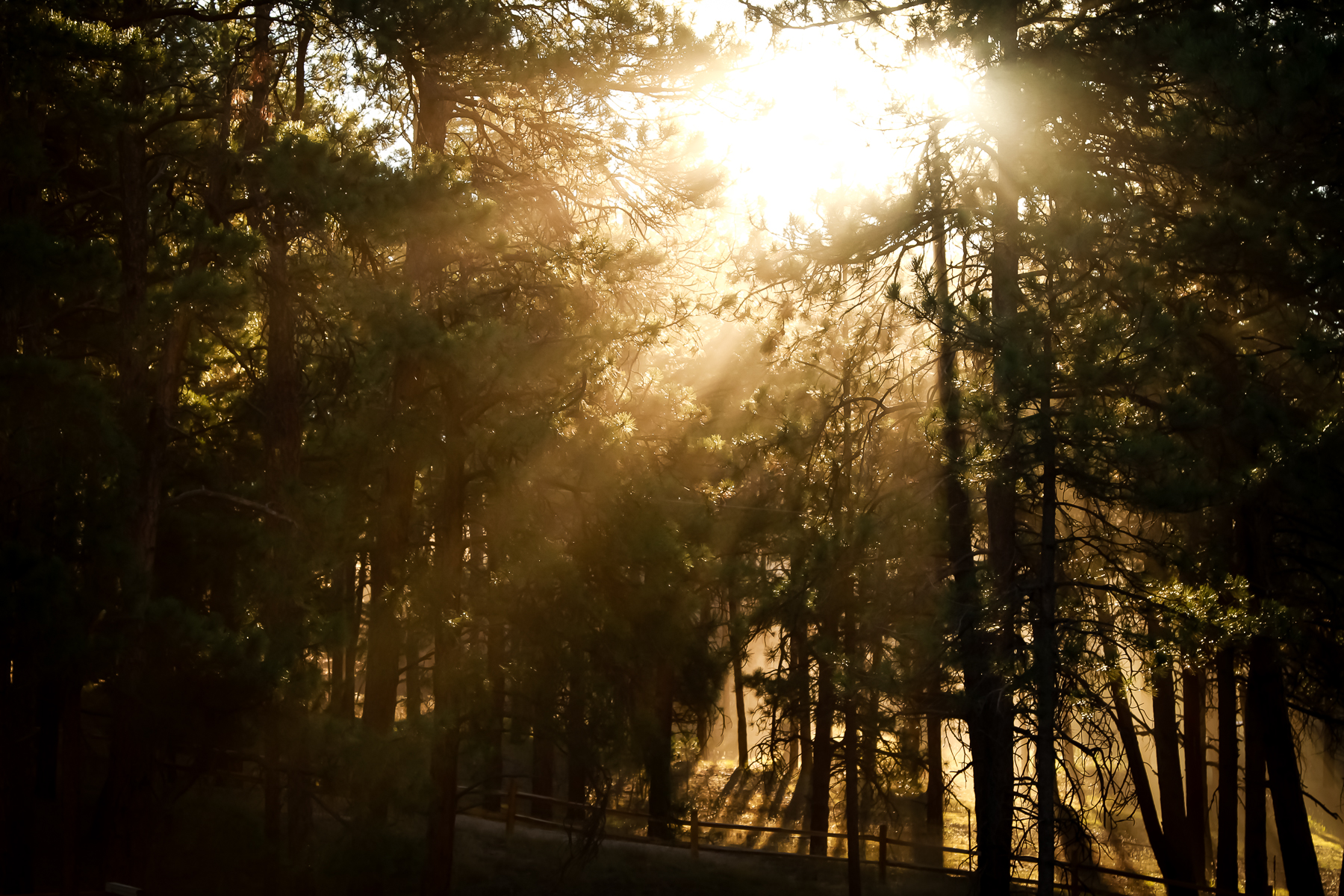
The featured image, “Early Morning Sunburst,” is courtesy of Lancia E. Smith and is used with her glad permission for Cultivating.
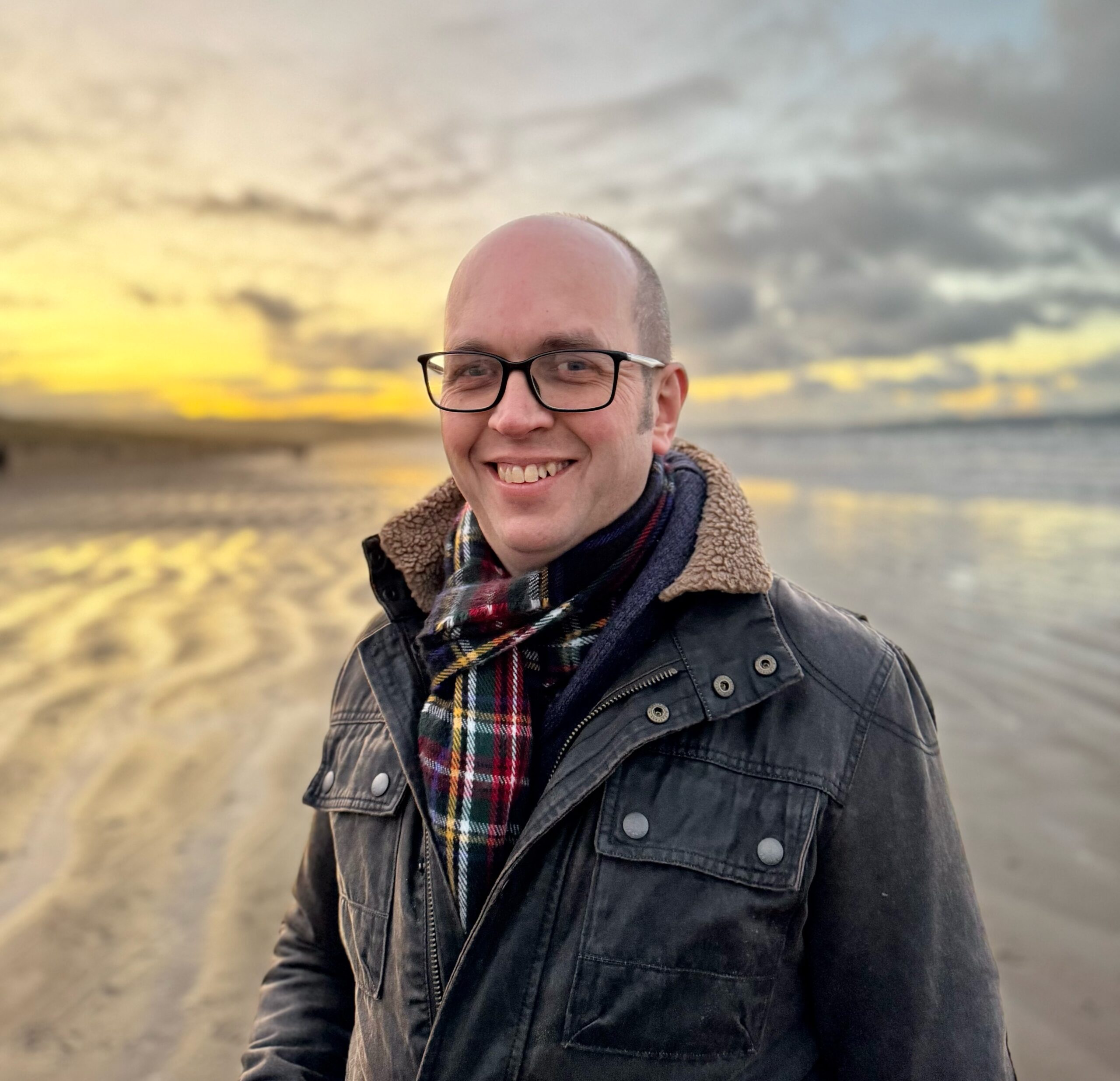
Andrew Roycroft is married to Carolyn, and they have two teenage daughters. Originally a
medievalist by training, Andrew served for 24 years in full-time Christian ministry – mostly in
local church pastorates. Andrew is a visiting lecturer at the Irish Baptist College, teaching
Biblical Theology and Apologetics. An active writer, Andrew has published poetry in a number of
Irish and British literary journals, has produced work for BBC Radio 4, has contributed to Arts
Council Northern Ireland projects, and written commissioned work for New Irish Arts. Andrew is
also a regular contributor to the Rabbit Room Poetry community. His first poetry collection, 33
(published by Square Halo Books in 2022) is a collaborative work with visual artist Ned Bustard,
offering reflections on John’s gospel. Since leaving pastoral work in November 2024, Andrew is
working as a freelance editor and writer.

Add a comment
0 Comments