


Cultivating Calling and Pilgrimage is a meandering column documenting the pilgrimage of faith. It’s an occasional letter arriving in the mail from that shabby, wandering uncle you only see a few times year, describing the odd bits and bobs of books, songs, stories, people and places that have struck his fancy, put a lump in his throat, or kept him putting one foot in front of the other toward the Face of Jesus, that Joy set before us all.

There’s a road through the woods somewhere between Louisville and Ackerman, Mississippi, where I know I can’t drive my van. It’ll get stuck. There are two spots on this particular road that cuts through a stand of pine trees my Dad planted about twenty-five years ago—two deeply grooved ruts in the soil—where water gathers and rarely goes away. Every time I drive down that road (in a 4×4, you can be sure) I try my best to dodge those ruts, but my wheels seem magnetized to them, forever slipping right back in, only deepening the grooves. I have to take special care not to get stuck there, anytime I’m passing that way.
When I say I can find myself going down roads where I wind up just spinning my wheels, even if I’m just sitting in my room in my own comfy reading chair, you can guess at what I mean, can’t you? There are old stories that, try as I may to avoid their ruts, I get stuck in sometimes. Places the trickling rainfall gathers and seems frustratingly slow to evaporate. It takes some kind of special equipment if I’m to get a grip in that slick mess—to get the necessary traction to move on down the road. And even when I finally do, I still feel the ick of all the mudslinging clinging to my tires. There’ll need to be a foot-washing of sorts.
Or, to change images, it’s like there are bug bites that, if I leave them alone, would probably heal fine enough. But, boy, do they feel good to scratch! There are stories that, for me, still have some bite to them, and I have to be careful not to take pleasure in further aggravating the already-irritated flesh. That’s just another way of getting stuck—scratching that itch of unforgiveness, of ruminating on ways I’ve been wronged, of staying stuck on the things that bug me.
Recently, I heard someone describe forgiveness as simply letting something go. But letting go isn’t always simple. It can be hard for my heart to allow for. I don’t want to open my hands; I want to close them around something, to encompass it. I want to feel a sense of power over the situation, of certainty that the wrong won’t be repeated, as if my grip might really manage to ensure it. Let it go? Open my hands?
Aside from the desire I’ve been describing to control things in order to feel safe against a trespass, it also just feels kind of good to nurse grudges. Maybe you’ve heard the old saying, “Unforgiveness is like drinking the poison and hoping the other person will die.” A phrase like that sticks around for a reason. If we’re honest, it’s just so relatable.
But if forgiveness really does draw some kind of poison from our own bloodstream, undergoing the extraction isn’t just about letting someone else off the hook, it’s also about us escaping a trap.
We may not even realize to what degree the toxin has been affecting us, until it’s gone. Have you or someone you’ve known ever suffered from an allergy strong enough to alter daily life, but mild enough to go undetected? For instance, you can get used to feeling tired all the time, till you think it’s normal. Then you find out something you eat every day has been zapping your energy, creating a soul-depleting domino effect. Maybe it’s something you really love, like gluten, and you’d almost rather feel like garbage than give it up. But that’s the thing—whether it’s pleasure, safety, or power that’s keeping us from letting go, this stuff is stealing, killing, and destroying us from the inside out.
A friend reminded me that, in real life, there’s a lot of in-between space as we’re slowly learning to let go of the things that we’ve come to love but that aren’t good for us. And there’s a lot of in-between space as we slowly heal from the things we’re working to forgive. The good ways God would have us walk in aren’t automatically natural or easy for us to grasp, and human souls don’t magically or instantly mend. We’ll have to learn new skills, ask for help, learn the topography of unfamiliar territory, endure seasons of grief, or persevere through growing pains. We’re people, and that’s how people grow.
It almost goes without saying, but I’ll say it anyway: the letting-go of forgiveness does not mean that we are letting go of our own agency in a harmful relationship. Forgiveness doesn’t obligate us to remain in dangerous circumstances with a person or organization. A mentor of mine once assured me that to remain a doormat for wicked people is a problem in both directions—it excuses injustice on their part and perpetuates it on our part. That may be a new idea. It was for me when I first heard it. I had thought it was somehow noble to roll over and die, rather than resist evil. But to capitulate is to forfeit the dignity of my own calling to bear witness to the beauty of God’s image in me. There’s no reason to feel obligated to pay your pearls out to swine, especially once they’ve confirmed the nature of their character.
I once heard someone make a distinction between hurt and harm. Hurt is normal in any good relationship at various points, of course. However, I’ve been in relationships that really were harmful. These were more than difficult—they were outright destructive, carving long roadways of deep-rutted damage. Conflict is normal; contempt is murderous. In either case, whether our enemy is a run-of-the-mill sinner or a diabolical abuser, Jesus our Master demonstrates a quality of freely given forgiveness that is truly outlandish. I mean it is so external to our understanding and any this-worldly reckoning as to seem obscene or insane—or as Paul calls it, “foolish.” (1 Corinthians 1.18–31) The word “obscene” literally means “off-stage/scene,” and that’s where this kind of grace comes from—beyond this world.
At the center of Christianity is a God “whose character is always to have mercy” [1].
The literal crux of our faith is a Person who, through His own free choice, releases the free gift of forgiveness into the world for anyone willing to receive it. At the root, Christianity is (or ought to be) characterized by graciousness and mercy, by a growing capacity to forgive our enemies, perceived or real. There’s no way around this feeling dangerous! It did get Jesus killed, after all. But the alternative is what I fear are the ruts our culture spins its wheels in for the most part—that is, an insular self-protection at best, and a power-hungry dominance at worst. Jesus was not naive. He forgave in full view of the very worst humanity could throw at Him. So does the kind of forgiving love Jesus shows you and me make a different way of living possible for us?
I don’t think we could expect to be able to forgive our enemies without supernatural assistance. And anyone who needs forgiving, at the very least and in the moment, certainly feels like an enemy. I think it’s true that, if our lives were just in our hands, and our own hearts were all we had to draw from to love others, we could never afford to forgive anyone. It really would be foolish. But we are in Jesus’s hands. We have Jesus’s heart pouring a superabundance of grace into ours. We can afford to let go because of how securely we are held by Christ. Especially since letting go doesn’t necessarily mean entrusting ourselves to our so-called enemies (ordinary or truly evil) but entrusting ourselves to Him.
Psalm 84.5–7 says,
How blessed are those who find their strength in You
and long to travel the roads that lead to Your temple.
As they pass through the Baca Valley,
He provides a spring for them.
The rain even covers it with pools of water.
They are sustained as they travel along;
each one appears before God in Zion. [2]
I don’t know how long it took for those ruts to be worn down into the road out at my family’s farm. It didn’t happen overnight, that’s for sure. Learning to travel the ways that God’s grace traces out for us is a process, too. But Jesus is always providing a Spring of Living Water for us in those valleys where our salt tears have trickled down to fill the low ground as we’re doing what we can to make inroads where the way is scary or uncertain to us. He sustains us as we go and He affords us, not just some rule to keep or merely a nice moral example, but His own presence and assistance as a fellow pilgrim who knows all about the work and the cost of letting go. He forgives us as we learn to forgive, and He holds us as we learn, in the midst of hurt or harm, to hold on and, ultimately, to be healed.

[1] The Prayer of Humble Access, Book of Common Prayer
[2] The New English Translation does not capitalize pronouns referring to God; these have been added by Cultivating’s editors.
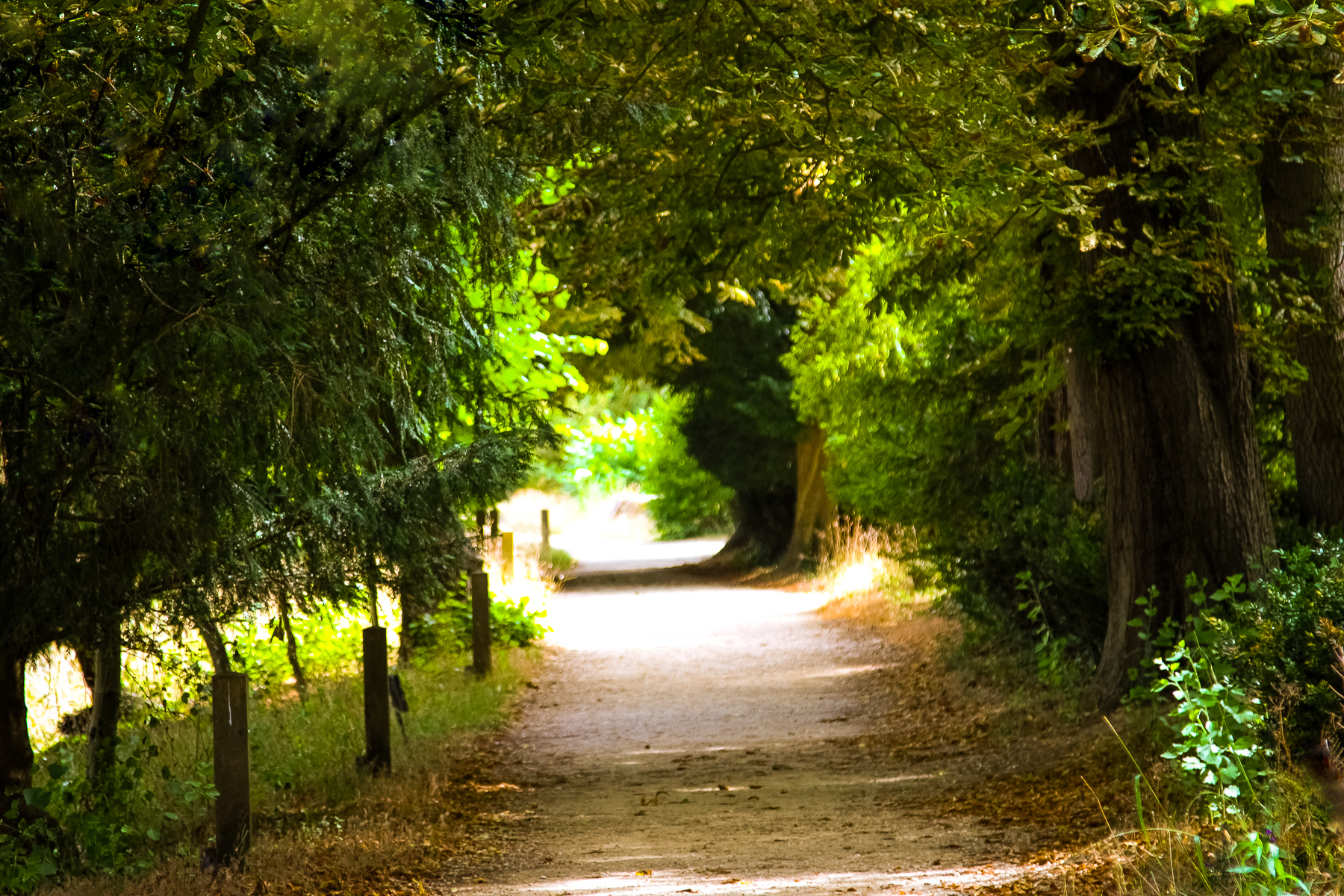
The featured image, “Addison’s Fabled Walk,” is courtesy of Lancia E. Smith and is used with her glad permission for Cultivating.

Matthew Clark is a singer/songwriter and storyteller from Mississippi. He has recorded several full length albums, including Matthew’s latest project, “The Well Trilogy,” 3 full-length album/book combos released over three years. Each installment—Only the Lover Sings, A Tale of Two Trees, and Where the River Goes—is made up of 11 songs and a companion book of 13 essays written by a variety of contributors exploring themes around encountering Jesus, faith-keeping, and the return of Christ. You can find the books on Amazon and the albums on Spotify and Apple Music.
A founding member of The Maker’s Project and a columnist for Cultivating, Matthew’s essays reflect on faith-keeping and pilgrimage. Matthew travels as a touring musician and speaker sharing songs and stories in a van called Vandalf.

Add a comment
0 Comments