



Cultivating Fatherhood is a space made for the dads among us who love their kids and yet know that the adventure of parenting, with all its joys and beauty, can also be a perilous one. Make no mistake, showing up for your kids is beautiful, rewarding, hard, holy, brave work. My efforts are here intended to provide encouragement and understanding that equips us for our responsibility to the amazing beings who call us “dad.”

The old man winced when the dying sunlight caught the corner of his eye as he and his son rounded the last hill home. But it was seeing their tent, after their harrowing journey, which caused him greater discomfort. This tent had been the only home his son had ever known, a safe haven; but until now, the son had never felt the need to be kept safe from him. The old man’s eyes ran along the woven goats’ hair covering stretched over support poles and surrounded by scrub brush. The two approached, followed by their servants and a donkey loaded with their remaining supplies and a pair of fresh rams’ horns that swayed back and forth with each step.
The child’s mother stood at the entrance of the tent waiting for them. She had waited nine decades to become a mother, and all that waiting made any separation between her and her son more difficult to bear. When she saw her men returning, she ran toward them. Seeing his wife run at her age usually made the old man smile, but now her swift steps just seemed to hasten a difficult inevitability. How would the old man explain to his wife that her child almost did not return to her—and that it was nearly by his own hand?
Though the boy was taller than his mother now, he would always stoop down and hug her deeply . . . but today she read something in his stifled embrace that worried her. Putting her wrinkled hands on either side of her child’s face she tried to look into his eyes to see what troubled him, but his gaze would not meet hers. As he walked on slowly toward the tent, the old woman turned to her husband with bewildered confusion and saw only desperation in his eyes. The old man wondered if she would ever again look at him like she used to.
A feast was laid out for their arrival. Mutton had been prepared in the boy’s favorite way, but he refused to eat it, requesting some of the wild game instead. But when the father grabbed the knife to cut off a portion for his son, the boy flinched. A small flinch, almost imperceptible to everyone else except to his mother and his father. The old woman watched in confusion as her husband laid the knife back down. Then he slid his plate with wild game to their son, and left the tent.
The night sky shone with its usual brilliance. Numberless stars illuminated its dome—as if the heavens themselves were covered in lapis lazuli, collecting along the banks of a river of light that flowed from one end of eternity to the other. The sight always struck the old man with holy awe. Years before it was under these very heavenly lights that the voice of Adonai YHWH promised to take this single dying star of a man and turn him into the father of a galaxy all his own.
The old man took off his sandals and pushed his toes into the dust as he remembered what that voice once said: “I will surely bless you and make your descendants as numerous as the stars in the sky and as the sand on the seashore.” But what right did he now have to become the father of many nations when his own son would no longer look him in the eye?
Despite this being his wife’s first child, it was the old man’s second. The first child came about because the old man, after years and years of waiting, decided to try to make the promise come true himself. Adonai YHWH had said the heir would be of the old man’s own flesh and blood, but after so much time, his wife began to blame herself and assumed she was the one standing between him and the divine promise. So the old woman offered one of her enslaved women to him as a substitute. Whatever sympathy he held toward his hurting wife, however much he may have initially resisted, ultimately the old man chose to accept her heartbroken offer. And then he too began to believe that this was how it was meant to happen.
But that first child was not the child of the promise. And the presence of that child, through no fault of its own, brought bitterness and shame to their household. It did not bring the family together; it was not making the old man “a great nation,” but rather was splintering that “nation” apart. Resentment and shame caused enmity to grow between the women. The old man didn’t know how to fix the brokenness caused by his faithlessness. He prayed that somehow God would make the child of the enslaved woman his heir. But the voice spoke again that no, the promise was not just for him but for his wife too.
Nothing in his power could make the promise come true, so the old man laughed. And when the three divine Visitors came and spoke again so that Sarah could overhear the promise that was hers too, she also laughed. But hers was the laughter of a broken heart that dared not open itself again to such crushing disappointment. As if each chuckle was a manifested longing: “How dare you wake up this dream? Just let it die with my already dead heart.”
However, the son, born not just of his flesh but hers as well, did come! And the old woman’s bitter laughter turned to the laughter of joy. When the baby was grown and strong enough to be weaned, the whole community held a feast and celebrated together. But hatred now hardened the space between the two families. Conflict rose so viciously that eventually the first son and his mother were cast out. Though his heart was heavy, the old man hoped that this would allow his new nation to now increase as promised.
But years later, when the second child was older, Adonai YHWH’s voice came to the old man again and told him to take the son of his wife, the son of the promise, and kill him on an altar. The old man hung his head in sorrow, but the next morning he loaded a donkey with wood for the fire and chose two servants to accompany them. He called his son to come with him so they might both make a sacrifice to Adonai YHWH. Each step of the three-day journey brought a new thought into the old man’s mind as he tried to somehow make sense of it all. Perhaps the promise is not yet spent! Perhaps Adonai YHWH will raise the boy back up again! But as he kept walking, his hopes became fears. Perhaps I have lost Adonai YHWH’s favor. Perhaps I have failed with this son too. Perhaps I have broken covenant and can no longer be the father of any nation at all. While he pondered these things, an even darker part of the old man’s heart remembered the stories of the cities around him—how the Canaanites would sacrifice their own children to a god of stone. Though the old man felt sick at this and even thought them foolish for worshipping such a petulant, selfish deity . . . now his heart wondered if somehow his God was just like theirs too.
The boy’s voice broke his rumination when he asked where the animal for the sacrifice was. But all the old man could utter was that Adonai YHWH would provide. And at the top of the mountain both their hearts broken when, even before the old man said anything, the boy realized the sacrifice was meant to be him.
Tears broke from the old man’s eyes when he saw the boy lie down on the wood willingly. He could easily have overpowered the old man and just run for his life, but he didn’t. Was it trust or despair? Was it the softness and tenderness in the boy that made him unable to move, even when it meant his death? His older brother would never have laid down. The old man’s first son was wild and wiry, stubborn like a donkey. He understood his older son; he even liked him because in some ways they were the same. But this youngest boy was soft and sensitive and stayed close to his mother. And now, on the mountain far from his mother, this son, the son of the promise, watched as his father raised a knife to end his life—all because a voice the son had not heard had told the old man to do it.
But suddenly his father stopped. He was looking up into the sky, confusion and relief colliding on his face. Then the knife began to move again, and the boy cried out when it made contact—but it was the bonds that were cut, not his flesh. The boy shook uncontrollably as the old man lifted him up and held him tightly, weeping and laughing. When he pulled him from the altar, the boy’s legs gave out and he collapsed to the ground. The old man sat him up against the altar, then removed his own cloak and covered the boy as he shook. Then the old man saw something behind the altar and got up and ran out of sight.
A few minutes later, a trickle of blood ran along one of the pieces of firewood and dripped down onto the boy’s shoulder. Still in a daze, the boy turned at the sensation and let out a scream at the sight of blood running along his arm. The father raced back around the altar to the boy’s side, searching for what could be the matter. The boy gaped at the bloody knife held in his father’s hand and nearly fainted. When he saw the boy’s face turn pale, the father followed his gaze to the knife, and quickly threw it to the ground. Then he pulled his son back from the altar so he could see the body of a ram lying on top of the wood in his place. The father held the boy tightly, pressing his face against his son’s ear. He whispered what he had heard again from the voice above: that Adonai YHWH did not truly wish for the boy to die. The father cried and spoke words of love, apology, and comfort to his son. And over and over, he tried to assure the boy that God had provided. “YHWH yireh! YHWH yireh! YHWH yireh!”
Eventually the boy stopped shaking, and the father lit the fire. The two watched the sparks leaping to join the stars that once heralded the promise of the child’s birth—shining as the old man held his son, who was as one raised from the dead.
As the old man saw those same stars from the front of his tent three days later, he cared much less that his son would make him a great nation—rather, he just wanted his son to be all right again. He prayed to Adonai YHWH that He would be gracious to the boy, that his son could live the rest of his life in gentle peace. That nothing more would be asked of one who had, at such a young age, already given so much.
He walked back into the tent and saw that his son had fallen asleep, leaning on his mother like he did when he was small. The old man took a blanket and laid it across them both. He put his hand on his son’s shoulder, and when the boy squirmed in his sleep, he withdrew his hand but did not leave his son’s side. He laid down, and rested his arms at his sides, making sure to keep his palms up so that when his son awoke, he’d see them empty and open.
For many days ahead, the boy would hold both the old man and his God at a distance. Though no evil was done or intended, and even though it was all part of a mysterious—if not unsettling—divine plan of love that would bless generations to come, there was still real pain that needed to be healed. Though something very much like forgiveness could happen, it would take time—possibly even a lifetime. Either way, his father would be there.
The old man no longer felt he had to make the promise come true. He couldn’t even if he tried. He was not strong enough, fruitful enough, nor righteous enough. It was not his job to make himself a great nation; it was his job to love his child, and it was his job to trust Adonai YHWH to provide. As it always had been, and always would be.
YHWH yireh.
YHWH yireh.
YHWH yireh.

The featured image, “Looking Back,” is courtesy of Julie Jablonski and is used with her kind permission for Cultivating.
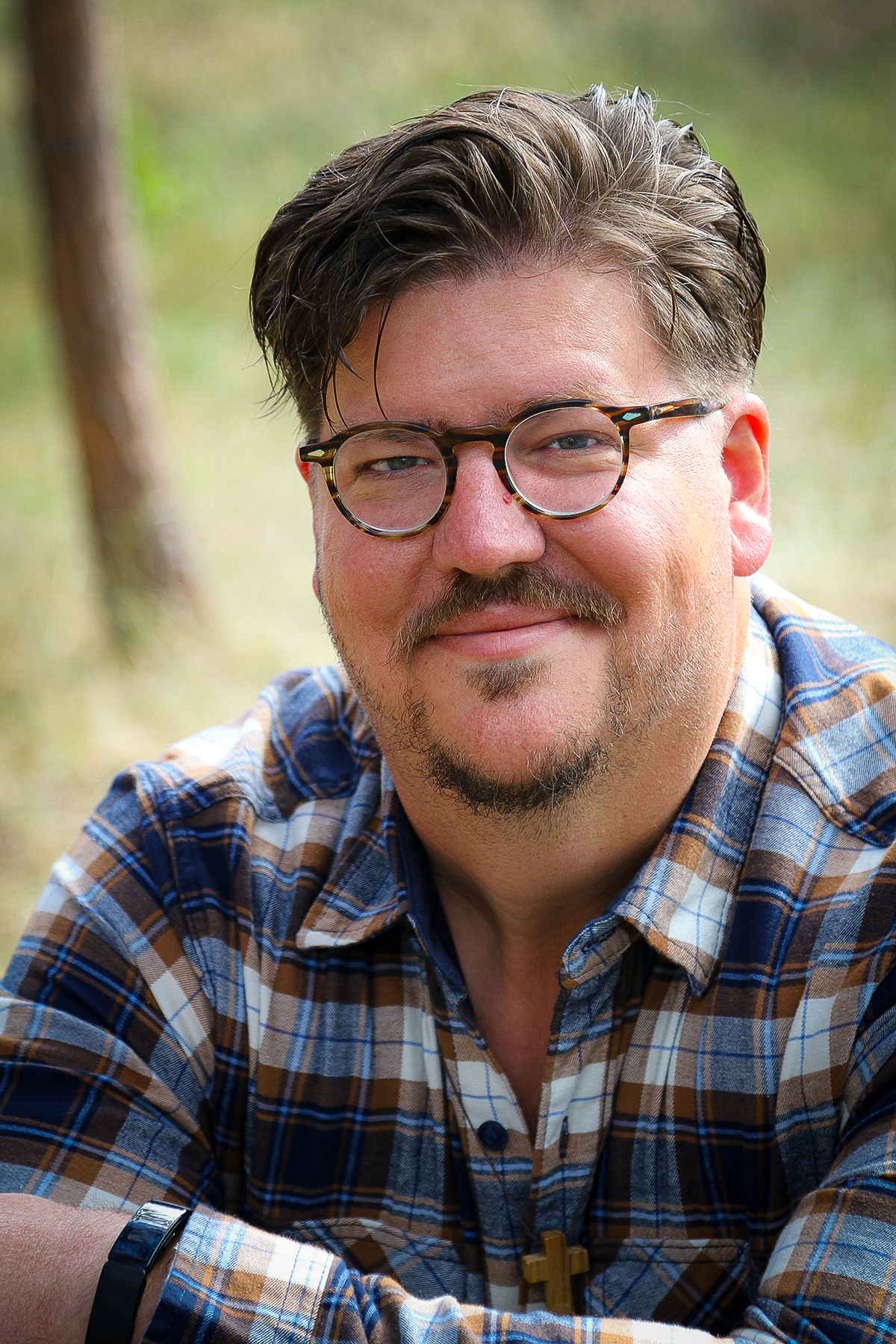
Adam Nettesheim is Director of Fellowship for The Cultivating Project, and a columnist for Cultivating magazine. Through writing and illustrating, Adam seeks to pull on the golden thread that leads us Homeward. Adam is a ‘Multi-Media Specialist’ by day at a municipality in Colorado but his most important (and favorite) work is husband to his wife Sarah and father to his 3 children.

Add a comment
0 Comments