


During the reign of French King Louis XIV, one of the king’s courtiers, Nicholas Fouquet, used his family’s immense wealth to build a grand chateau in hopes of garnering the king’s favor. He designed the chateau with the lofty ambition of reflecting the glory of the king and of France, and with the hope that his extravagant loyalty would be richly rewarded with a more influential position for himself. With lush gardens, Baroque architecture, and interiors that were, floor to ceiling, a work of art, his Château de Vaux-le-Vicomte was an influential and enviable achievement of architecture and grandeur.
To some, though, it all seemed just a little too luxurious and impressive. A political rival of Fouquet wondered aloud to King Louis XIV how exactly Fouquet, who in addition to his family wealth had unequaled access to the king’s treasury as Superintendent of Finance, had afforded a home of such opulence. The insinuation was clear, and though there was no evidence against Fouquet, the seed was planted in the king’s mind.
On August 17, 1661, in an over-the-top gesture of flattery and loyalty to the king, Fouquet arranged for a grand fête at the chateau in his honor. The unmatched lavishness of the party was all the evidence the king needed to see, and, at the repeated prompting of Fouquet’s political rival, he ordered Fouquet to be arrested for embezzlement. Fouquet was later sentenced to lifetime imprisonment. French Enlightenment thinker Voltaire, who was in attendance at the party, later wrote:
“On August 17, at six in the evening Fouquet was King of France. At two in the morning, he was nobody.”[1]
The fated fête that marked Fouquet’s fall from grace, his calculated display of loyalty gone terribly wrong, took place under the frescoed ceiling featuring the Charles Le Brun painting that Fouquet had commissioned, which was named, ironically, “The Triumph of Fidelity.”[2]
Betrayal and self-serving plots are a tale very nearly as old as time. Many nations tout fidelity as a foundational virtue, including it in their mottos and building statues on imposing government buildings to embody it. Brides and bridegrooms promise fidelity to their union until death, including it in their vows and building a life on it. And yet, we have seen faithfulness discarded for expedience or appetites du jour. We have witnessed loyalty offered self-servingly or consumed carelessly and its bones spit out after it has served its purpose. It’s easier to scoff—we’ve simply seen too much—than to believe that something can be true and hold true.
Yet true fidelity is more than merely the absence of betrayal. Fidelity is the presence of a commitment to all that is most Good and True in another. Whether to a person, a community, an ideal, or the Divine, true fidelity cannot be separated from love. Fidelity without love is nothing more than patient self-interest that isn’t afraid to play the long game to reach its ultimate end.
This is most clearly seen in the point of decision one reaches when fidelity no longer holds a clear benefit. Only fidelity that is rooted in love can remain true even when there is nothing left to gain.
Over three and a half centuries after Le Brun painted “The Triumph of Fidelity,” on the other side of the world in a place that could not be less like a grand chateau, I gathered with my extended family in the mossy cemetery bordered by a split rail fence next to the old country church where my grandparents worshipped and served for most of their lives. As we stood together around the place where my grandmother had been laid to rest only a few weeks before, we shed tears and told stories.
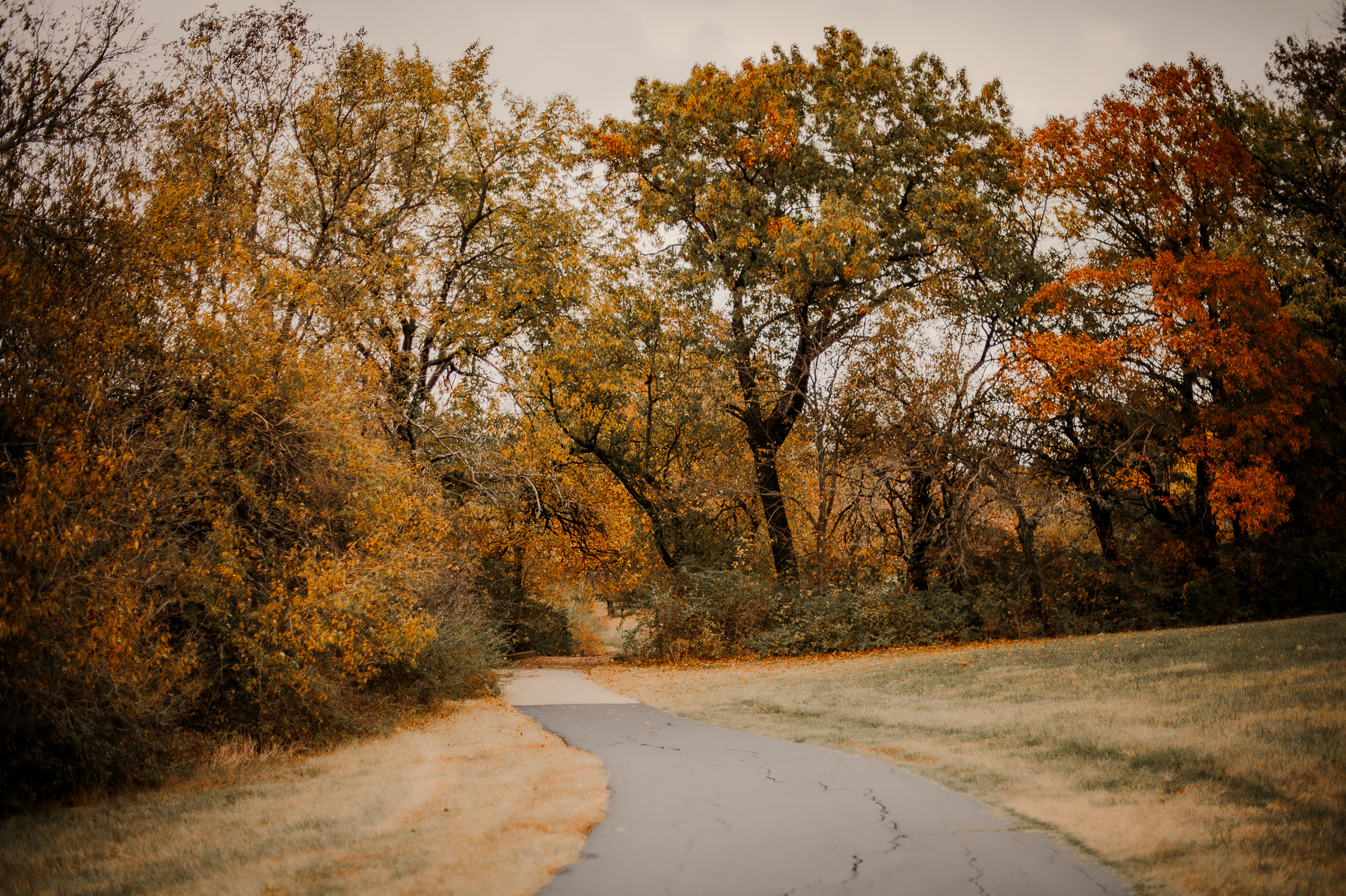
In the late October glow, the trees were brilliant while the grass underneath was fading into a forlorn wintry brown. That is, all except one lush, verdant oblong patch of grass over my grandma’s grave where there should only have been bare, freshly laid earth. My mom must have noticed my quizzical expression as I let go of her hand to kneel down to touch the only green grass for acres around.
“You know how your grandpa is with Grandma,” she said in answer to my unspoken question. “He couldn’t bear the thought of her grave having no grass on it until springtime. He planted some seed a few weeks ago and comes out most days to water it by hand.”
I shook my head and smiled, blinking back tears. How very like him.
Because of Grandpa’s continued care, the grass did not completely wither even through the bitter winter months. He tended the ground over his beloved’s grave as spring arrived. As cool rains gave way to the scorching heat of summer, he continued to make the drive out to the countryside most days with a full pail at his side to water the grass.
When I asked my grandpa about his careful practice of keeping the ground over her grave, he quipped in his gentle humor, “You know, she always was such a beautiful, well-dressed woman.” Then more seriously he said, “I know she’s up walking on streets of gold and this doesn’t change that, but, well, I’m here. And while I’m here I want to do this. This is what God has given me to do, and I’m going to keep the grass growing.”
There is a tale of fidelity, still more ancient than the well-worn story of betrayal and trickery, that goes back to before time began and unfurls before us without ceasing. In Psalm 104:3, the psalmist says, “When you send forth your Spirit, they are created, and you renew the face of the ground.” Ours is a story breathed out by God who is faithful to His own character and covenant love, and ever shall remain true to His word to renew and restore all things through Christ. We can receive His fidelity without fear of betrayal as a gift given in love, and are empowered by the Spirit to extend to others our faithfulness rooted in that love. And as we do, He joins our offerings of faithfulness to His story that is even now “renewing the face of the ground”—and our hearts—in love, and where, in the end, we will bear witness to the triumph of fidelity.

[1] Read more about Nicholas Fouquet on Château de Vaux-le-Vicomte’s website.
[2] Find Leslie Bennet Smith’s article “Ode to Glory,” about the Château de Vaux-le-Vicomte, in Victoria magazine’s May/June 2025 issue, p. 54.
The featured image is courtesy of Amelia M. Freidline and is used with her kind permission for Cultivating.

Danielle Mellema is a contributing writer for Cultivating Magazine and occasional guest host on the Anselm Society’s Believe to See podcast. She writes about welcoming the kingdom of God in our everyday lives and experiencing the presence of the risen Christ in the cracks and crevices of our days.
She lives in Colorado Springs, Colorado, with her husband, four young children, and Pembroke Welsh corgi Perceval. She loves reading and talking about books, exploring along the trails behind her neighborhood, long conversations on her porch, and recommending just the right local restaurant to friends and strangers. She is endlessly grateful for the privilege of receiving and releasing the gospel that heals alongside the wonderful people of International Anglican Church.

This is so your Grandpa ❤️. Beautifully written Danielle.