


The Cultivating Poetry column will explore both the writing and reading of poetry, and the practical ways this intersects with how our souls are formed. We will consider a range of poets, both contemporary and historical, looking for their invitation to us to see differently, to inhabit the world, together finding courage to live as a poeima in this beautiful, terrible world we have been given.
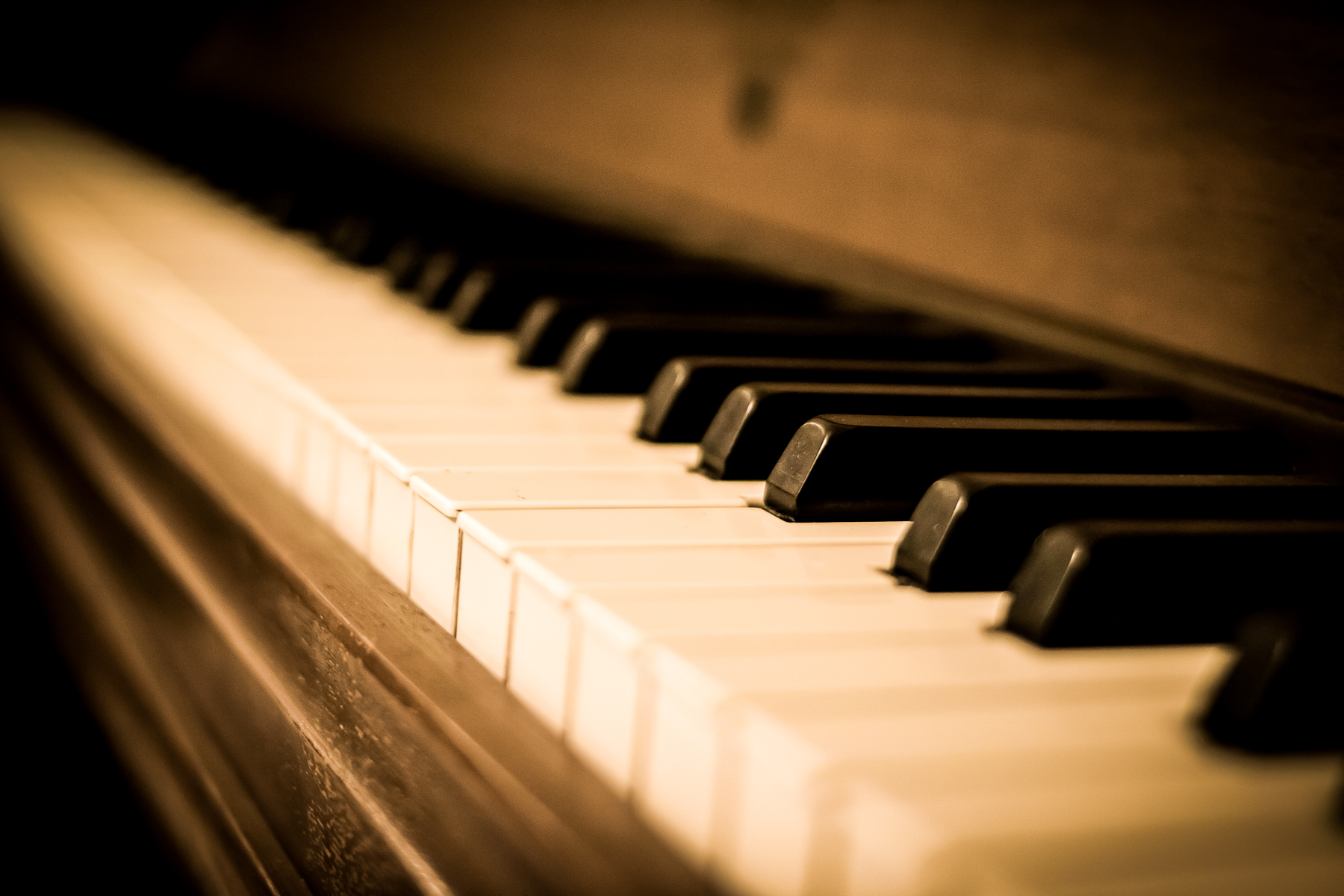
I am sitting at the antique piano my husband and I bought a few years ago, feeling the ivory keys give beneath my fingers as I move slowly, back and forth, in the key of C. I have barely played for decades, and my fingers are clumsy. I open my old copy of Variations on the Theme from the Celebrated Canon in D by Pachelbel and set my metronome. It is humble work. At the beginning, my fingers want to run ahead, to make beautiful sounds, but I have forgotten so much, and my fingers keep getting tangled. I need to do the long, repetitive work of letting my muscles remember.
The tempo noted for this piece is andante, the Italian word for a moderate pace, or walking. I am barely meandering. I play the second line, coaxing harmonies that expand the theme, when my throat tightens, and the ache of returning to the beauty of this piece for the sake of beauty alone leaves my eyes blurred and my cheeks wet. When I was young, I spent 13 years taking lessons, learning theory, practicing and performing. As my pieces grew more difficult, my anxiety grew. I did not “play” the piano, as I have come to understand the word play. When I sat down, even when I practiced, I was expected to perform.
The Christian culture I grew up in promised that if I followed God’s road, I would experience blessing. In my culturally evangelical world, this following meant homogeneity and keeping myself on the well-trodden path of sameness. The implicit blessing if I did: a life that escaped suffering. To risk understatement, neither of these went well. Playing piano was not the only place where I performed; walking out of the layers of control that I was taught came from God continues to be slow work. And so it goes, when culture replaces the invitation to live into the expansiveness of one’s complicated humanity with God. It is the work of walking out of and into, both. My life, andante.
In the early 1900s, the Spanish poet Antonio Machado wrote an untitled poem, known by its first line:
Traveler, your footprints
are the only road, nothing else.
Traveler, there is no road;
you make your own path as you walk.
As you walk, you make your own road,
and when you look back
you see the path
you will never travel again.
Traveler, there is no road;
only a ship’s wake on the sea. [1]
Jeremiah wrote, “This is what the Lord says: ‘Stand at the crossroads and look; ask for the ancient paths, ask where the good way is, and walk in it, and you will find rest for your souls.’ But you said, ‘We will not walk in it’” (Jeremiah 6:16 NAS). It is counterintuitive work to stand at the crossroads, to both look for the ancient paths and to make my own path, to continue to do the work of moving toward God’s invitation of shalom, toward my wholeness. How much easier to feel the safety of others’ approval, especially when this approval is given the weight of God’s. This walking is the work of fidelity, faith like what is chronicled through the stories captured in the Bible, and named as “the substance of things hoped for, the certainty of things unseen” (Hebrews 11:1 NAS). This work of walking out our becoming is the work of being a poiema, and not work I undertake without being connected to my Poet.
In late spring I took social media off my phone, and found that in its absence, it was not so difficult to draw a full breath again. I continue to carefully consider what rails I need around how I engage with the chaos of the larger world around me. It feels like such a small thing, this app, this phone. It is a small thing, but so are mustard seeds, and the moments with my children, playing catch, painting, untangling freshly shed snakeskin from the dew-dried grass. It is the smallest large thing there is; the desecration of my moments is at stake, the desecration of my faith, my fidelity. I must make the way by walking. Traveler, there is no safe way. You, too, must make the way by walking.
The poem “How to Be a Poet” by Wendell Berry unfolds the conditions, not only for writing poetry, but being human:
Communicate slowly. Live
a three-dimensioned life;
stay away from screens.
Stay away from anything
that obscures the place it is in.
There are no unsacred places;
there are only sacred places
and desecrated places. [2]
Perhaps the question God asked Moses: “What is in your hand?” (Exodus 4:2 NAS), is a fulcrum as l consider how I walk. All too often, the answer is a tiny screen, pulling me from receiving the present. It is easy to preach against the ills of this, that, and another, and to set up a new version of the old fundamentalism, but this is teetering me further from all that is Real. What is in my hand matters, because when I loom large as I bow over my screen, I am a god. I stand in the headwaters of the 24-hour news cycle and I am all-knowing, if only I can scroll a bit longer. I feel my shoulders brush my earlobes as I strain beneath the weight of it all. Here, I am an imposter, pretending; I grasp for control even as I have been treated as an object to control. My world shrinks, and beauty and wonder atrophy. My humanity ebbs, and I stand in desecration. Poetry halts; I have stopped walking. And yet my walking can begin again with the awareness of where my feet are right now, and now, and now again. It is the embodied act of picking up my pencil to make a simple sketch, to capture the lines of a poem. It is putting my hands on the keys and playing imperfectly, practicing because I am being written as I do. It is looking, as I walk, for the eyes of a community of Love that I was made from, made for.
I have returned to playing the piano alongside my children, remembering, relearning a new way to play, as they learn for the first time. There are times when sitting down to practice feels like wasting time, because I am struggling with something my adult brain tells me is unproductive. But what is time for, anyway, if not for walking out my days, and considering the lilies as I do? And anyhow, what is play but receiving the blessing of becoming more myself, remembering that my productivity will never earn me the love I long for? Playing the piano has become an act of reclamation, returning to myself, walking out my repentance.
I was raised to believe that fidelity was to creed and organization, but the more I walk, the more I agree with Oswald Chambers that
The Christian life is stamped by ‘moral spontaneous originality,’ consequently the disciple is open to the same charge that Jesus Christ was, viz., that of inconsistency. But Jesus Christ was always consistent to God, and the Christian must be consistent to the life of the Son of God in him, not consistent to hard and fast creeds. Men pour themselves into creeds, and God has to blast them out of their prejudices before they can become devoted to Jesus Christ. [4]
And so walking is simple, but not easy. These little stones of repentance don’t sink to the bottom of the pond without rippling out to affect all aspects of my life. I am walking out my freedom, to be always constant to God, and let the rest go. Andante.
Again, Chambers says “There is no thrill in walking; it is the test of all the stable qualities.” If I am to become whole, to become Real, to write and be written as a poiema, I must do it by walking. I cannot rush. God, before changing Abram’s name to Abraham (by adding a letter from the spelling of God’s own name) said, “I am El Shaddai (“God all-sufficient”); walk (before My face) and live habitually before Me and be perfect (blameless, wholehearted, complete)” [5]. God’s call to Abram was to walk in relationship—not to be without fault, but to be whole, to not blame others, to live with God being enough. This invitation to Abram is the same that God all-sufficient offers to me. To us all.
And so, as I fumble my way through new lines of Pachelbel, as I walk away from the safety of institutions, party lines, and creeds, I find myself in the company of an expansive God who isn’t worried about me figuring it out or getting it right. God is interested in being with me as I walk, so close that I can see God’s face, if I’m willing to look. And this is God’s faithfulness to me in Jesus, filling me with the Spirit of freedom at my simple asking, welcoming my poiema to be included into the anthology of the ages.

[1] “Traveler your footprints,” by Antonio Machado.
[2] “How to Be a Poet,” by Wendell Berry.
[3] Exodus 4:2 NAS
[4] My Utmost for His Highest, by Oswald Chambers.
[5] Genesis 17:1, mash-up of AMPC, Darby and RGT
The featured image is courtesy of Michael Maasen via Unsplash. We are grateful for his generosity.
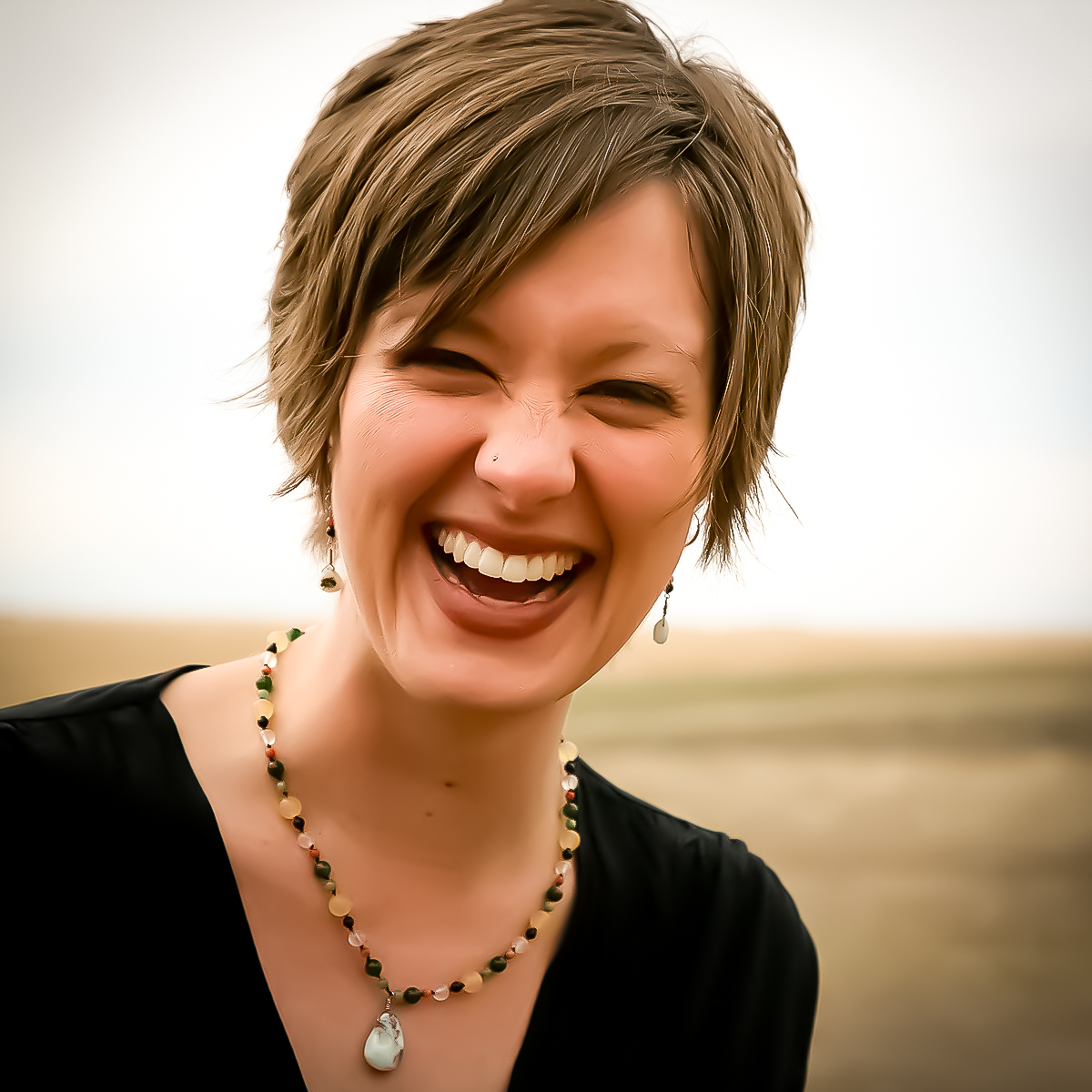
Amy Malskeit, a columnist for Cultivating Magazine, holds an MA in creative writing from Lancaster University in England. Her poetry and creative nonfiction explore questions about God, faith, and the soul, letting these refract through the small moments in her life.
She lives in the foothills outside Denver where she plants her garden and makes her home with her husband, two children and a sassy Tibetan Terrier. When she’s not reading or writing, she enjoys laughing with her family, finding ways to swim in an ocean, and nurturing ways of living creatively.

Thank you so much for these words. I needed very much to hear them: “…what is time for, anyway, if not for walking out my days, and considering the lilies as I do? And anyhow, what is play but receiving the blessing of becoming more myself, remembering that my productivity will never earn me the love I long for”.
This may be a little weird and the comment a little misplaced. You were my teacher once and you left a great impression on me. You told me before, you were working on a book and to keep an eye out for it. I never did find it, but I did stumble on this. It’s good to see your writing. This passage in particular resonated with me. 17 years later in life and I’m still learning things.