


Cultivating Place is a column considering our relationships to the varied places we have been planted. As followers of The One who became flesh and made his dwelling among us, who wept over the earthly Jerusalem, we will explore the unique opportunities each of us has to seek the good of our place, wherever that may be.

“I had laid my claim on the place, had made it answerable to my life. Of course, you can’t do that and get away free. You can’t choose, it seems, without being chosen. For the place, in return, had laid its claim on me and had made my life answerable to it”
— Jayber Crow
In the hamlet of Le Hamel, deep in rural Normandy, stands a traditional French farmhouse, surrounded by an expanse of wheat that ruffles in summer like a golden sea. This is the landscape of La France Profonde —‘deep France’—where narrow lanes weave through woods and farmland; and old ways of life quietly persist, hidden away from the gravitational pull of the cities.
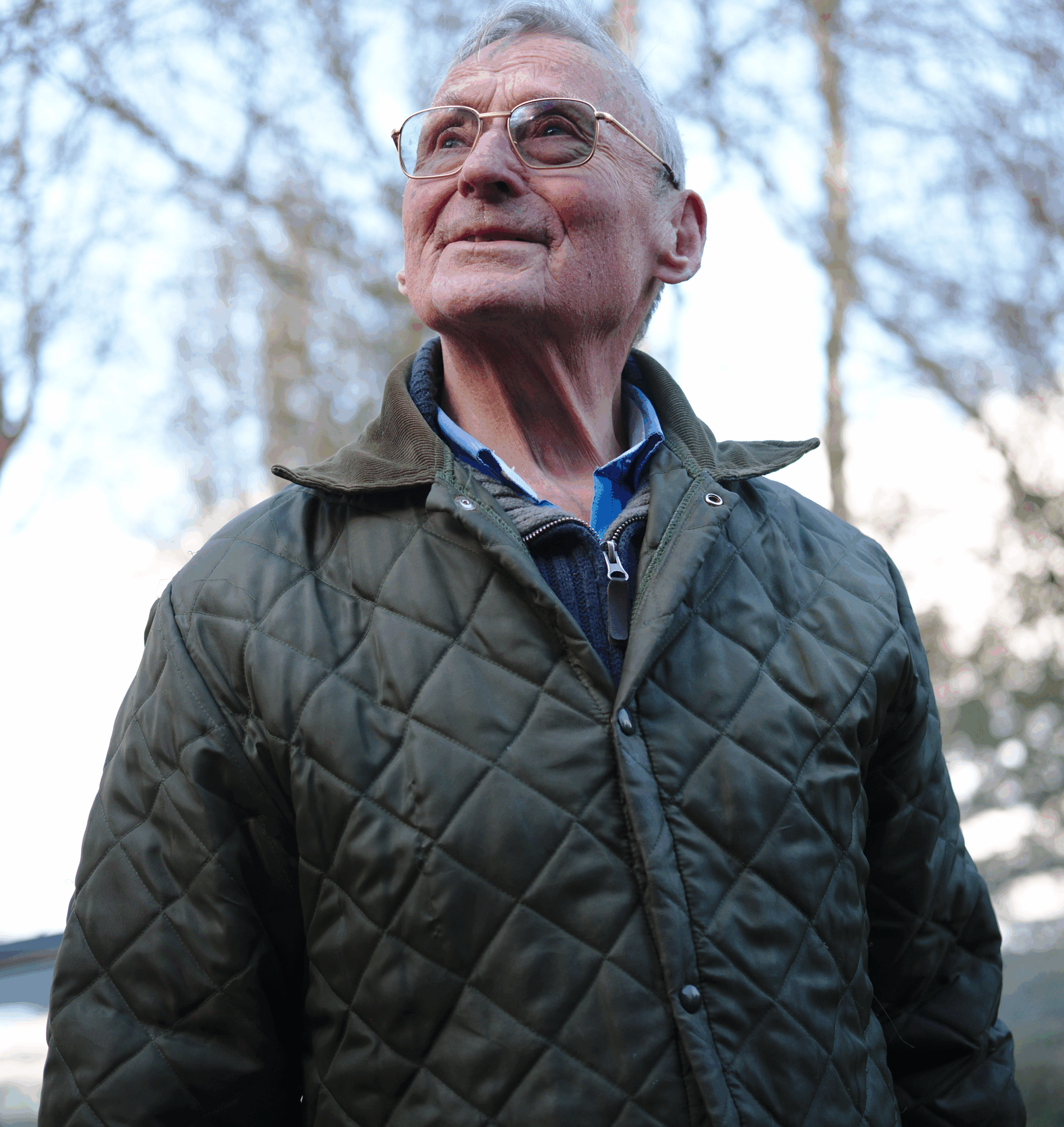
It is here my great uncle, David Mylchreest, spent the last fifty years of his life. Arriving in the 1970s to take up a job breeding racehorses, he slowly became fluent in both the language and the traditions of his adoptive community. His heavy-beamed farmhouse was arrayed with the artefacts of a near-century of life spent in work and leisure under the sky: the paraphernalia of hunting and racing, pairs of gleaming riding boots, a painting table scattered with watercolour studies of his beloved animals.
Yet among the trappings of rural life were hints of a less idyllic bond with his adoptive country: regimental insignias, military medals, and photographs of VE-day commemorations. For David Mylchreest’s relationship with Normandy had begun not in the 1970s, but in June 1944, in the aftermath of D-Day, when he landed as a replacement officer on the bloodstained sand of Arromanches. Over the next three months, David would lead his men through some of the fiercest fighting of the French liberation. As a lieutenant in the 43rd Wessex Division, he was in the front lines of the battle for Hill 112, one of the bloodiest episodes of the entire conflict. From there, his unit pushed on to encircle and rout the German forces in the Falaise pocket. Driving West, he became the first Allied officer to cross the Seine at Vernon. By the time he was wounded out of Arnhem in September, Captain Mylchreest had been directly involved in many of the most significant engagements of the European liberation.
Though he would live another eighty years; three brief, bloody months had left invisible wounds which would endure a lifetime. And so, where I see only the Normandy of rolling pastures and grazing animals, my great-uncle recalls with painful clarity every spot where he cradled the broken body of a dying friend, or raised a rifle to the enemy. As he would say near the end of his life:
“I don’t think you ever forget that you killed people, really never. Nor do you forget the friends who fell beside you… The real heroes are my comrades who died in combat. I’m just a veteran.”
It was this painful burden of memory which, paradoxically, made David’s eventual return to France inevitable. For while his body slowly healed, the experience of the war had lodged—stubborn as shrapnel—in his heart and mind. His attempt to settle back in England was marked by unrest and deep unhappiness, culminating eventually in a deep personal crisis.
And so, while his emigration was a return to a land haunted by tragedy, it was also a form of homecoming; a physical return to a landscape he had inhabited in his memory for thirty long years. Settling in Normandy was an act of necessity, not of agency. Hemmed in by forces beyond my comprehension, David came to the place he needed to be; the only place he could survive.
In the land that marked him with profound suffering, he began, slowly, to thrive. The story of the last fifty years of David Mylchreest’s life was one of deep embedding within his adoptive community, made possible only by the painful burden which planted him in place. Over five decades, he would return to his native country only a handful of times, always with deep reluctance. Yet his life bore the fruit of his complete commitment. In the local towns and villages, neighbours affectionately referred to him as ‘Le Liberateur’. In his nineties, he was made a Knight of the Legion of Honour, in recognition of his war service, and his voluntary work with veterans’ groups and local schools.
We tend to think our possibilities for living well are proportional to the extent of our agency. David Mylchreest’s story testifies to a different reality. For while his life bore the fruits of radical fidelity to place; it was a fidelity shaped as much by bondage as free choice. Normandy chose David in 1944, and by the time it had marked his young life, he had lost the possibility of truly living anywhere else. Yet, paradoxically, within these bonds there grew unique possibilities for living, which could have been realised in no other way.
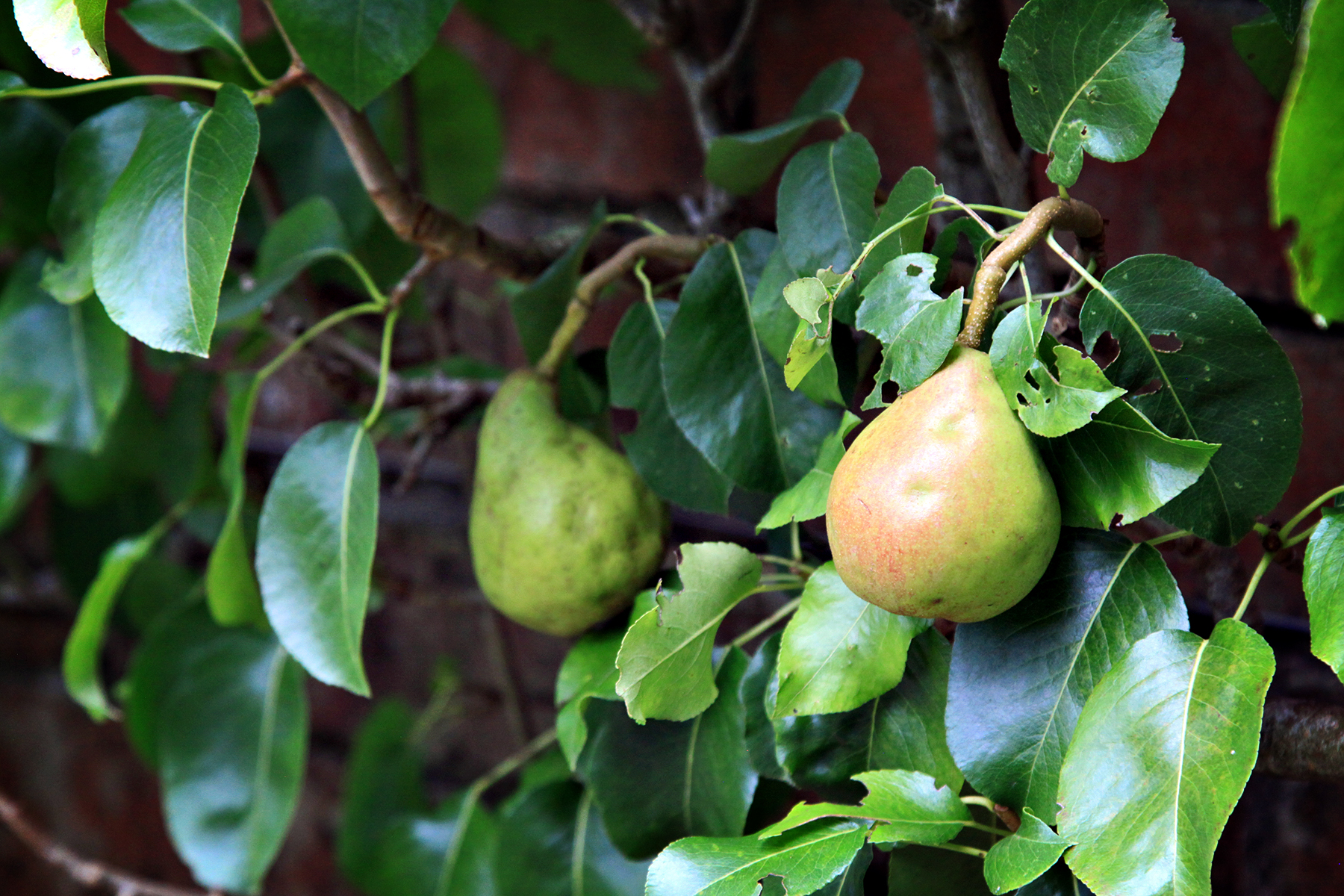
In our garden, we are training young apple trees using the espalier method; through which diligent pruning, staking, and wiring, eventually bring about a tree with beautiful and fruitful form. It is self-evident to the gardener that the desired form cannot be achieved without unrelenting, and sometimes severe attention.
Yet, what is true of the garden is true also of us. In truth, it is often our limitations and not our agency which shape us most profoundly. Paradoxically, there is good news here, for while our culture idolises self-actualisation, our lives are typically marked more by unsought bonds than acts of unrestrained will. Our physical or mental suffering, or our responsibilities to others, often tether us to a country, a town, or a dwelling which are not of our choosing. In extremis, the bed-bound sufferer finds their world diminished to the space within four walls. Yet, inextricably bound to the loss inherent in any of these limitations is an invitation to a unique form of fruitfulness.
I have wrestled to accept the boundaries enforced by chronic injury and illness, as my willful, younger self has been pruned, staked, and wired, in significant ways. But I am learning, with reluctance, to recognise this as an essential form of spiritual espalier, wrought by the firm and loving hands of my heavenly Father. In my more self-aware moments, I discern that my physical limitations are enforcing a fidelity to people and place which I might—given my restless and flighty nature—not otherwise freely choose. There is a form of redemption at play; as my youthful agency dies like a sown seed, so that a more deep-rooted and fruitful form of life might grow up in its place.
As a Christian, these experiences force me to confront truths previously hidden in plain sight. Because of the emphasis on our life-defining ‘choice’ to follow Christ, Western evangelicals easily overlook His greater choice to show radical fidelity to us. Yet a moment’s contemplation of our being “slaves to righteousness” (Romans 6:18), or the promise of the Father to “bring to completion” the good works he has begun in us (Philippians 1:6), should make clear I am not master of my own destiny. On the contrary, for the Lord to safeguard the higher freedoms for which He saved me, He will have to deny me many counterfeit ‘freedoms’ which would cause me to stray from him. Not for nothing does the psalmist sing:
“You hem me in, behind and before, and lay your hand upon me” (Psalm 139:5, ESV)
The experience of being hemmed in, which I have often bewailed as cruelty, is in fact proof of the Lord’s fidelity to my wandering heart. I am bound in ways I would not be if I were not Christ’s, so that I may know present and future joy I cannot know aside from Him. It can be hard to trust that being staked, wired, and pruned, by an attentive gardener is better than growing wild; that it is better to be rooted than to be free to pursue every whim and fancy. The challenge is to believe that He who turned the Valley of Achor into a door of hope can, gloriously and unexpectedly, transform places of limitation and loss into fertile ground for a planted and fruitful life.
There is no true fidelity without the laying down of agency, and the acceptance of boundaries; a truth to which my great-uncle’s life plays witness. He died at ninety-nine years of age, in a land where he had been irrevocably wounded, yet beloved by an adopted people to whom he had become inextricably bound. In the week David Mylchreest died, the local newspaper—Le Reveil Normand—published what is likely their first and last English-language headline. It read simply: “Goodbye Captain”.
The featured image, “Espaliered Pear in Wordsworth’s Garden,” is courtesy of Lancia E. Smith and is used with her glad permission for Cultivating.
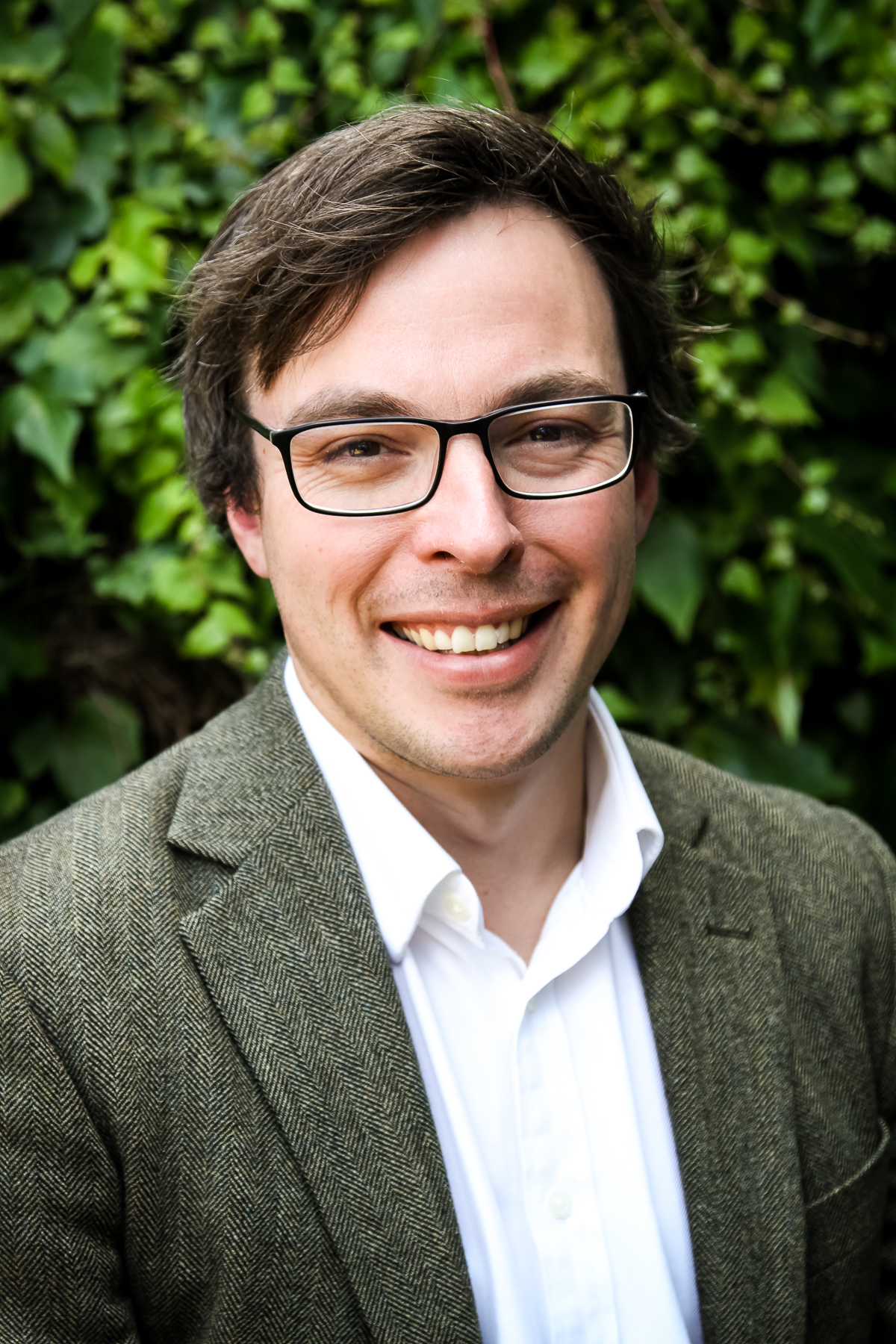
Sam is a poet, essayist, photographer, and songwriter, who explores the interspace between imagination and reason, faith and doubt, the physical and the transcendent. He’s inspired by the examples of G.K. Chesterton, Wendell Berry, and George Steiner: rare thinkers who chose to dwell in the painful yet fruitful tensions of these ‘in-between’ spaces.
Sam lives with his wife Colette and their two young daughters in the cathedral city of Winchester, UK. A recovering academic in the natural sciences, Sam now mixes science and semantics as a Patent Attorney; but by night, he returns to his first love of crafting sentences, stanzas and songs.
In addition to his column, poetry, and photography for Cultivating, Sam’s work has been published by The Gospel Coalition, Ekstasis, and in the poetry collection Cultivating the Sacred Ordinary (ed. Leslie Bustard & Amy Malskeit).

Sam,
Thank you for this very moving article. The Lord’s boundaries indeed protect us from wasteful wonderings. This is so well done, my friend.