



Dust motes spun in the golden dusk as the man leaned against a tree, breathing hard. It had been another long day of plucking ripe figs and carrying heavy baskets, and he was … He fumbled for the word he’d learned long ago for the ache in his arms and back. Tired. That was it. He was tired.
So many days of this labor. Mopping sticky sweat from his forehead, he looked out across the fields from which he’d hauled rocks during so many green planting seasons. He’d dug up sharp thorns and cruel thistles with bleeding hands. He’d driven ravens and sparrows away from crops of wheat, corn, and barley, mourning the long-ago days when he remembered those creatures as friends instead of enemies.
He straightened, wincing, and walked slowly through the long shadows of the orchard.
He and his wife had needed to learn so many new words since they’d left the garden. Shame had been one of the first as they tasted the fruit of the forbidden tree and felt their bare, exposed flesh for the first time. Fear followed quickly as they heard their Maker’s footsteps and realized He would see what they had done. Grief, as they walked away from the green paradise of their immortality, the cherubim’s sword flashing behind them like the wrath of lightning.
After they entered the cold, stony world outside, they’d learned new words every day. Pain, the first time he’d stubbed his toe on a rock. Agony, for his wife’s world-rending cries when she brought their firstborn into the world. Rage. Terror. Confusion. Resentment. One of the worst—murder—as he stood over the body of their second son and realized it was their firstborn who had struck his brother down. Violence. Envy. Pride. Hatred. Exile. A flock of words like black storm clouds as their banished son wandered far away and his family multiplied in children and evils.
As he drew near the tent, the man’s stomach growled at the savory smell of stew. Two of the youngest boys were playing in the dust by the door, constructing something with sticks and leaves.
A city, the man realized. Another one of the new words of this new world: a dwelling place with thick walls to keep out enemies, people who wished to do you harm.
“Mine is bigger than yours!” one of them said. The other responded by kicking one of the dust piles of the bigger city. The first wailed and hit him.
“Now, boys,” Adam said, standing above them and putting a hand on each boy’s shoulder. “Stop that. Seth, say sorry to Hanoch.”
“I’m Lamech, Grandpa,” said the first boy, staring up at him with wide eyes.
“Ah,” said Adam. He’d mixed Lamech up with his grandfather Seth, their thirdborn, long gone now. Or was Seth his great-grandfather? Great-great? There were so many children. The descendants had all settled on calling him Grandpa after the “great-greats” grew too many to remember.
“I am sorry, Lamech,” said Adam calmly. “Say sorry to Hanoch.”
“Sorry,” Lamech mumbled.
Adam turned to the other child. “Hanoch, do you forgive Lamech?”
“Do I have to?” Hanoch asked, staring up at him. With both pairs of dark eyes intent on him, Adam suddenly saw himself as they did: a bent and shrunken man, weak and white-haired, only a little younger than the dust they were playing in.
“Yes, you have to,” he said gently.
“I forgive you,” Hanoch mumbled to Lamech.
Forgiveness. That had been one of the most difficult new words to understand, but they had learned it quickly the night after they left the garden, when they argued about where to camp. Then again the next day, when they argued after finding that mice had discovered their small store of nuts and berries. Then many cold nights and weary days, when they were hungry, tired, and irritable. To say sorry and offer forgiveness, to acknowledge the wrongdoing had been lifted off the offender like a heavy load, was the one thing that had kept them together and alive.
“Good,” Adam told the boys. “Now go in and have supper. Tell them I’ll come in soon.”
As the children got up and ran inside the tent, Adam looked up at the darkening sky. A cool wind rustled the leaves of the fig trees, and he tucked his fur robe more tightly around him.
He was so tired. He would have to wake up again tomorrow to face it again: the stubbornness of the hard ground, the quarrels that raged through their family, and the toil that never ended.
Something stirred in the dust at his feet. Without hesitation, Adam stomped on it savagely, putting all his weight into the blow. When he lifted his foot, a small black serpent lay coiled there, its head crushed. He struck it again to make sure, then stared at it, recalling the glittering scales and honeyed voice of another serpent, long ago—one that he had failed to crush. The weight of that memory and all the others pressed in on him, a burden too heavy for him to bear.
“Grandpa!” It was Lamech—no, Hanoch—no, one of the other little offspring at the door of the tent. Then another, and another, their voices bright and sweet as birdsong. “Grandpa! Grandpa! Supper’s ready!”
He found himself smiling. The weight lifted from his shoulders for a moment. They kept coming, these little ones, generation after generation, fragile but full of life. Every time the cry of a newborn rang out, he and Eve would look at each other with a silent hope: maybe this would be the promised one …
“I’m coming,” he called.
Adam slipped into the tent where his family waited, his whole soul ready for rest.

The featured image, “Pumpkin Stack,” is courtesy of Lancia E. Smith and is used with her glad permission for Cultivating.
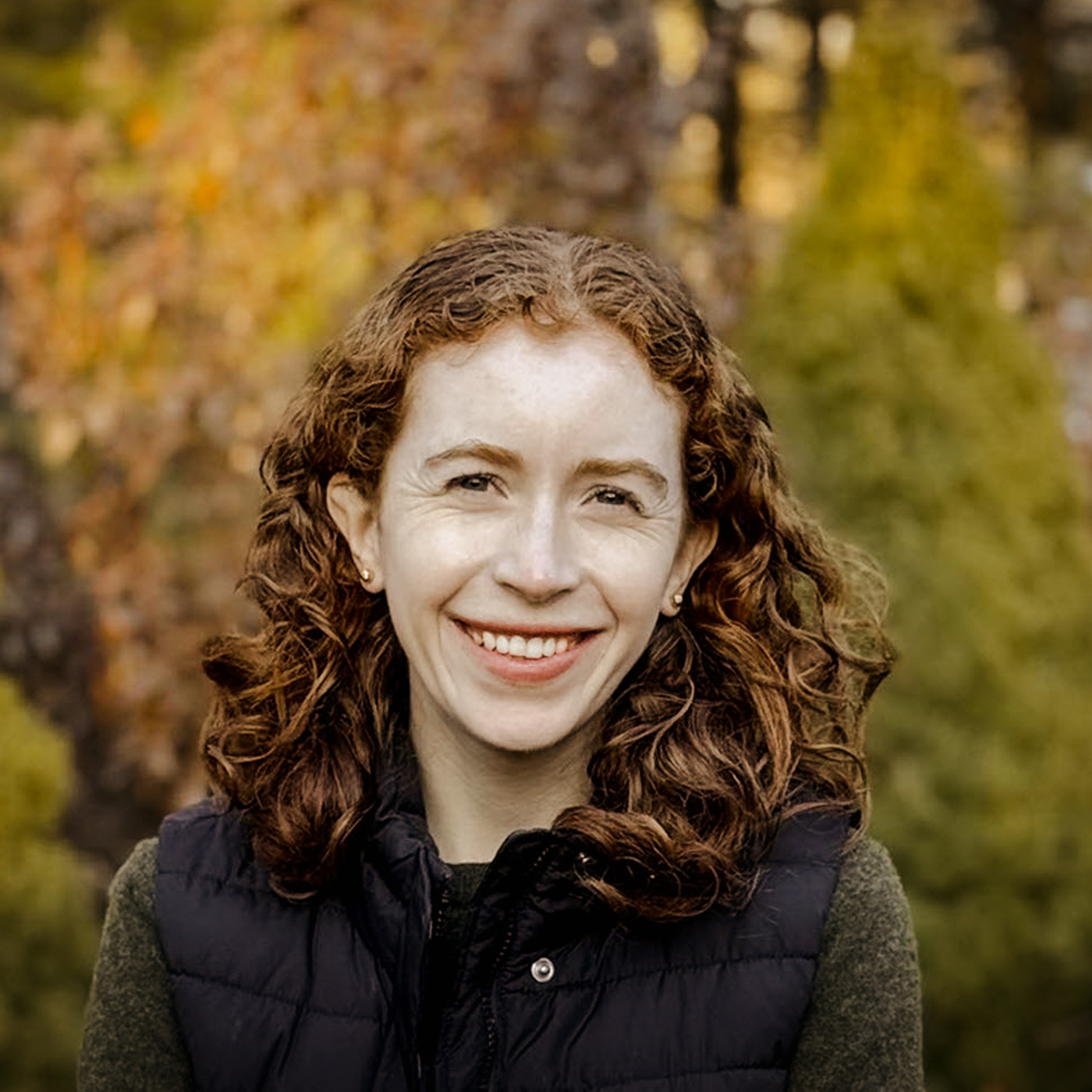
Alicia Pollard is a follower of Christ, storyteller, and Bible teacher. She lives in New England, where she loves hiking through forests and climbing mountains. She studied Theology and the Arts at the University of St. Andrews in Scotland, where she explored the Deadly Sins of Sloth and Anger, the relationship between faith and imagination, and the works of C.S. Lewis, J.R.R. Tolkien, and T.S. Eliot. In the past, she hosted a podcast, “Leaf by Lantern,” which explored retelling fairy tales through the lens of Scripture.
In her spare time, Alicia loves spending time with family; reading fantasy, mysteries, and sci-fi; writing fiction; and sometimes photographing mossy rocks or the sun rising over lakes. She blogs about yearning, books, and glimpses of transcendence at aliciapollard.com.

Add a comment
0 Comments