


Cultivating Fatherhood is a space made for the dads among us who love their kids and yet know that the adventure of parenting, with all its joys and beauty, can also be a perilous one. Make no mistake, showing up for your kids is beautiful, rewarding, hard, holy, brave work. My efforts are here intended to provide encouragement and understanding that equips us for our responsibility to the amazing beings who call us “dad.”

The whole way home he couldn’t stop looking at his son. He just couldn’t. This constant affection unsettled his son. At first he pretended he couldn’t see his father staring at him, but when that didn’t work the boy got visibly annoyed. He’d look at his father out of the corner of his eye, scowl, scrunch his face, lower his head and raise his shoulders. When the boy couldn’t take it anymore he tossed his hands in the air and blurted out “Dad, you gotta stop!” And yet the father smiled all the more. His son was in his right mind enough to be annoyed with him again! What a miracle!
The father had not seen light in his son’s eyes since childhood, since the day that fresh face, full of wonder, turned dark and void. Hollow. Not empty, but not full of him. Full of something else entirely. It was his son, and yet it was not his son. His son lost his voice. Not like when he had played and laughed and hollered so much that his voice became raspy and faint—rather he had no voice at all, and no mind to send it forth. What came from his mouth was a dripping of saliva. Not the adorable drool of an infant, but the salivation of something inside of him, hungry, eating him from the inside out yet never satisfied. Whatever fed on him would even cause his teeth to chew and gnash—or was it the grinding of pain? Was it some trace of his child fighting back or suffering under this occupying force that had taken him over in malevolent conquest?
The legs that once ran and played grew rigid and unmoving, the arms that hugged his mother while she was alive were now stiff as boards. How the father now wished he had hugged his son more when he had the chance … how he wished he had hugged his son at all. No doctor could heal him, no family member could discipline him, no well-meaning or pushy community member with advice, no matter how certain, could awaken his son from this living nightmare they were both trapped in. Slowly but surely, when each could no longer bear their own discomfort, they were relationally shunned by their community and left alone.
The boy continued to require constant supervision. There was no moment of the day that the father had to himself. And then it happened. One evening, while sitting next to the fire, while the flames danced in his son’s vacant eyes—in one horrifying movement the boy went from sitting to leaping into the air, coming down right on top of the burning logs. The father shrieked from the pain in his heart, and then from the pain in his own flesh as he leapt into the fire to save whatever remained of his son. Somehow the boy was still alive. He dragged his son to the river to put out the flames and soothe both of their wounds, but the closer they got to the water the more the boy fought him. It was as if he, or whatever was inside of him, was refusing to be put out. Eventually the father got him into the shallows and the flames were extinguished. The boy went rigid and fell back motionless again. The father caught him, then sat them both down in the mud and wept.
After they returned the father tended the burns and open wounds of his son diligently while the two ate nothing but dry cold food and slept in the cold dark. The father did not risk the child’s proximity to flame again. Several days passed with the boy not moving at all. He just lay there, eyes open, mouth foaming, chest making shallow raspy breaths in a strange ungodly rhythm. The father was so tired and so sore. Both of their bandages needed cleaning, so he slowly walked over to the river to wash them. But no sooner had he bent down than a large splash of water flew across his back. He looked up to see the ripples left by something large that had just plunged beneath the surface, then stood up and looked around, confused. But when he saw the empty mat where his son had been, he knew. The father dove in and searched frantically, grasping, swimming, eyes stinging, gasping, clawing the river floor, and almost drowning himself until at last his hand caught hold of his son’s foot. With all his strength he pulled his son from the river and collapsed on top of him, pressing the water from his child’s lungs. The water came out the boy’s mouth and nose, but the expression on his face did not change. Though his son was breathing again, it was as if there was nothing truly alive about him.
The cruelty of whatever now controlled his son—throwing him into the fire, fighting against the water that would save him, and then several days later using that same lifesaving water to try to end his life—this was no illness, not of the mind nor the body nor the will. There was no earthly word to describe it. It could be nothing but somehow the malicious work of Sheol.
What chance did a small insignificant man like him have against forces he could not stop, forces he could not even see?
But a new hope grew. He could not fight this force, but perhaps Yahweh could. The father took his son to the local synagogue, but before he could even share about his son’s inner disease, they both were pushed out of the door because of the outer condition of their skin. The burns that covered them were hastily diagnosed as “unclean” by the hurried and impatient priest that slammed the door shut. It was as if Yahweh Himself had flung the door in their faces too.
No charity from earth or heaven. No help against the forces below. No life for his son, and no peace for himself. The father became empty too. What good was hope? What good was belief now?
As he dragged his son back home, he saw a crowd had gathered by the foot of the tall mountain along their way. Had he a mind to find anything fascinating he would have wondered at the unseasonable cloud on top of it, but nothing the Lord God could make could catch his attention today. He began to push his way through the crowd when he heard scribes from the synagogue shouting. The same self-righteous tone the father had just heard himself now came from those ahead. But other voices answered by shouting back. This caught the father’s attention. If there was anything inside of him left that could feel pleasure, it would have enjoyed hearing someone tell these scribes off. He listened as a particularly blusterous Pharisee waved his arms in “holy” rebuke.
“You have the audacity to claim your ‘rabbi’ has walked on water, fed thousands of people himself—TWICE even!—raised the dead and even healed the blind and the mute?!” The father stopped as the religious leader pontificated on. “We hear you claim he healed a woman with bleeding who TOUCHED him! And even cast out a demon from the daughter of a Gentile dog! You claim his power shows he is righteous, but we say these very acts show that he is NOT a righteous man!”
The father’s mind was swimming. His breathing quickened. This rabbi they spoke of could cure, could heal, could free those possessed by demons … he would even touch those that others would not touch—those that the representatives of Yahweh refused to touch, to even look at. … Could … could he? Could this rabbi bring back the voice of his son, bring life back to his eyes, and free him from the evil that had possessed him? Was it possible? … surely not. Surely this was just another false hope—another cruel ironic trick. Surely …
His son was twisting more than usual, his mouth dripping and his teeth grinding with agitation. The father tried to steady him but the boy flopped to the ground. The crowd stopped arguing and turned to look at the father and his son. The religious leaders took one look at their burned skin, the foam from the boy’s mouth and his crumpled form, and they stepped back with disgust. But one of the men stepped out from the crowd and knelt by the father. He was not one of the religious leaders. He looked like a tradesman. The man looked at the son and then motioned for others to come over.
“This looks like what we saw in Gadarenes. Remember ‘Legion’?” The boy shook again and the men gathering around nodded at one another. Another of the men placed a hand on the father’s burned shoulder, causing the father to jerk in pain. The man removed his hand apologetically, but the father didn’t care anymore. The man sat down and looked the father in the eye. “Is this your son?” The father nodded. “Our rabbi can fix this. We’ve seen it. But He’s not here just now.” The man pointed up the slope of the mountain, which was now no longer covered by a cloud. The boy now shook and foamed more violently and the father began to weep. “I … I … I can’t do anything for him! I can’t fix it! Everything I try seems to make it worse!”
The men looked back to the mountain as if they hoped to see something, but when they didn’t, they turned and spoke to each other in hushed voices. “I think we should give this a try.” “How?!” “I saw Him do it, I think we can do it too. I mean look at this boy! Look at his father! We’ve got to try!” “I don’t see any pigs around here like last time! What are we gonna send them into?!” “Listen, we’ll figure it out. Let’s just give it a shot.” The men turned back to the father with deep compassion. They encircled him and his son and held out their hands. The crowd went silent. Then one of the men yelled, “Come out of the boy, unclean spirit!”
The body of his son slowed its rapid breathing. The father’s eyes widened. Could it be?! Then there was what he could only describe as … laughter… a joyless … black … cackle from somewhere inside his son. Then the shaking resumed. Then all the men standing in the circle around began shouting “Come out of the man, unclean spirit!” “Come out of the man, unclean spirit!” “Come out of the man, unclean spirit!!” The laughter now came from the religious leaders standing around them. The more the men shouted, the more the religious leaders laughed, the more others around them all argued, and the more the father despaired.
“What are you arguing about?”
A voice broke through and silenced the crowd. The father felt another hand on his shoulder again, yet the pain he now felt was different—like the initial sting of a healing balm. When he opened his eyes and looked up, he saw a Man unlike any he had ever seen before. Nothing about His appearance itself was remarkable, but there was something behind His eyes. Where behind his son’s eyes there was nothing, a void filled by evil from another realm, this Man … this Man was somehow the exact opposite, and more so.
The father could barely whisper, and yet something in the eyes of the rabbi gave him strength to speak. He told the rabbi about his son, and then, without meaning to, all of his dashed hopes from trying to get help time and time again, false hope upon closed door—even here with the rabbi’s own men’s inability to bring healing—all of this came flowing out of the father on a river of tears.
The rabbi’s face changed as He looked at His followers. The father knew that look. A paternal look of disappointment, yet still full of love.
The other men hung their heads, and some apologetically nudged rocks with their feet as the rabbi admonished them before turning back to the father to softly say, “Bring him to Me.”
The father, though his soul felt like a deep, empty well with nothing but a few drops in it, somehow lifted his son. The rabbi took the boy in His arms and looked at him. He wiped the foam from the boy’s face, but when the boy’s eyes fell on the rabbi’s face the boy shook more violently than he ever had before. His legs thrashed, his arms flailed, and foam flew from his mouth. It was as if every part of his body was in open rebellion against the notion of existence. And, once again, the father saw his son getting worse because he had dared to hope, and dared to try.
But this rabbi was not put off by his son’s contortions, nor his flinging saliva, nor his burns that were now rubbing raw against the rocks, causing them to bleed. This rabbi was not getting up to leave. This rabbi was not turning them away.
“How long has this been happening to him?”
The father told the man about the fire and the water, but as he spoke, the father felt this rabbi could see more than what he was telling Him in between sobs. It was as if this rabbi could see the sleepless nights, and the anguish, and the exhaustion. But he could also see every other secret struggle the father had. How he did truly love his son, how he wanted the best for his son, but how his ego was wrapped at his son’s birth around the idea of being a “good father.” That it wasn’t just about providing for his son for his son’s sake, but for his own. How he, since his son’s condition had made him feel incapable of ever being a “good father” as he defined it, sometimes resented his son—though he’d never let his mind hold the idea for long. As much as he was angry at those in their community who refused to understand them, he himself couldn’t really fully understand that this was somehow not his son acting out or not trying hard enough.
And beneath all that, every one of the deepest, darkest feelings and fears that he dared not put into thought or admit existed somehow floated to the light and were laid out on the table between the minds of these two men. Nothing was hidden. No stone unturned. The son’s full condition, and the father’s too.
And yet, in all the darkness, in all the despair … despite what seemed like the absolute desolation of all he had ever experienced, every hope squashed to nonexistence, as all was laid bare, there was something small that remained. Almost the size of a mustard seed. The tiniest hope left that pushed out the father’s lips: “Please. Please. If You can do anything … please help my boy.”
It was as if the rabbi could see the glimmer in the blackness, the speck in the void, and a smile came to His face as He leaned in. This rabbi saw the impossibility of the distraught father’s hope despite it all. And now He wanted the father to see it too.
“If you can believe, all things are possible to him who believes.”
Tears flowed down the father’s face again. The speck of hope inside him was somehow not enough and yet enough all at once … and now the father saw it too.
“I believe?” the father whispered. The rabbi’s eyes smiled slightly. “I believe.” The blackness shook and wanted to squash out the spark, but as if it was the last gasp of a dying man, raging against the void, the father shouted out, “I BELIEVE! I BELIEVE! HELP MY UNBELIEF!”
And somehow, that small spark inside him burst into a flame, and that flame swallowed up the darkness, and it glowed deep and sure and strong. The darkness was pushed out of him by the light, and somehow he knew, he just knew what would happen next. And for the first time since the last time his son did, with tears of joy the father smiled.

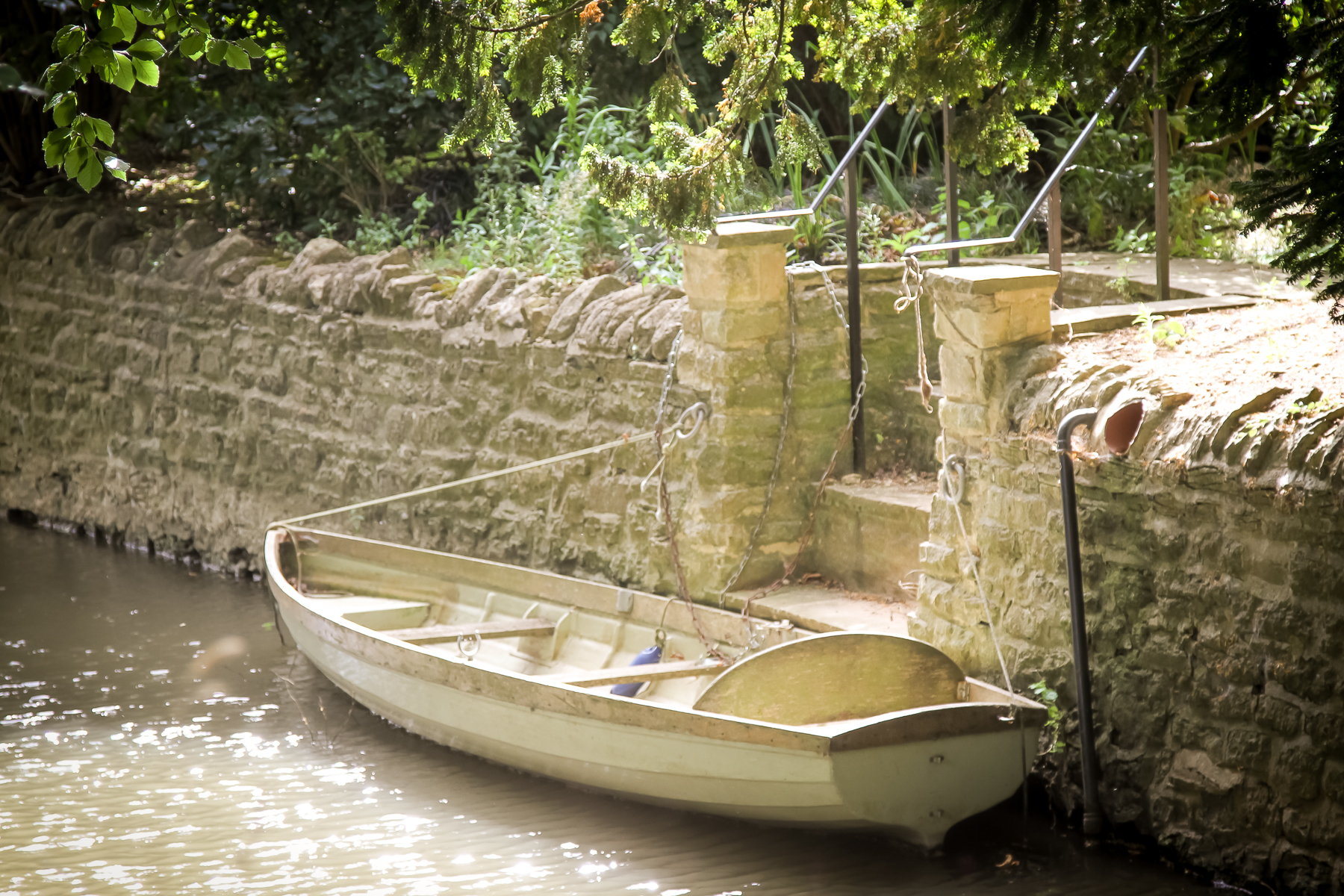
The featured image, “Boat Near Addison’s Walk,” is courtesy of Lancia E. Smith and is used with her glad permission for Cultivating.
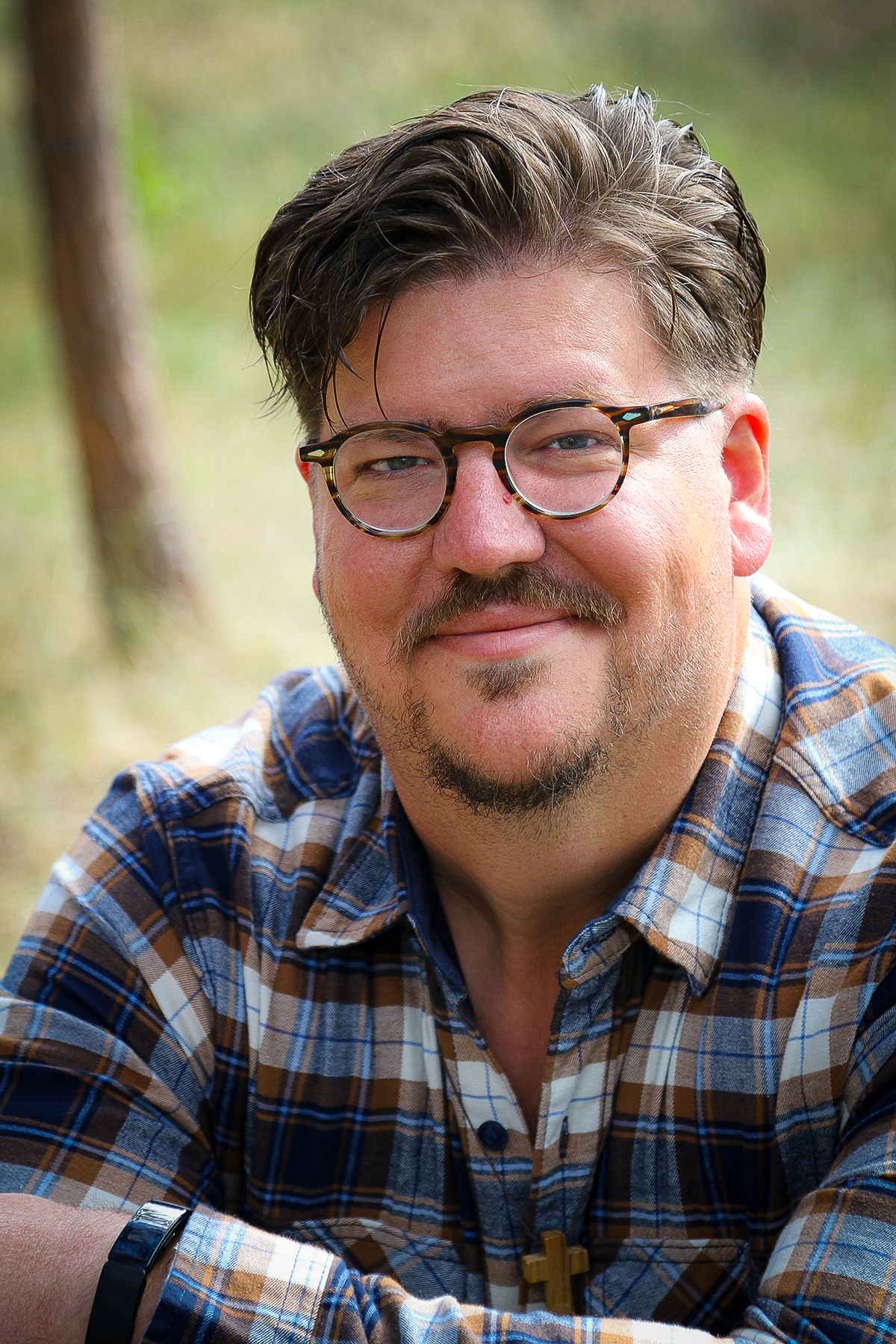
Adam Nettesheim is Director of Fellowship for The Cultivating Project, and a columnist for Cultivating magazine. Through writing and illustrating, Adam seeks to pull on the golden thread that leads us Homeward. Adam is a ‘Multi-Media Specialist’ by day at a municipality in Colorado but his most important (and favorite) work is husband to his wife Sarah and father to his 3 children.

Add a comment
0 Comments