


The Cultivating Reader—Literary Leaf-Mould provides a fresh source of recommended books gathered from classic and contemporary authors. I introduce you to varied genres through the ages—classic literature, poetry, essays, and inspiring nonfiction. And you may find just the right choice for a book club gathering or luncheon because breaking bread together over a good read builds fellowship. My prayer is for you to set aside time alone or with friends and linger over good words!

“Like the mother bird to its chickens or a shield to the arm’d knight: so is the Lord to her mind, in His unchanging lucidity.”
– C.S. Lewis, The Great Divorce [1]
My cell phone ringtone sliced through the silence in the bedroom.
“Annie, your dad is having a hard time again and we can’t calm him down.”
I told the night nurse to put him on the phone. “Hey Dad, what’s going on?”
He was agitated again; this wasn’t the first time the nurse had called in the early morning hours asking me to talk him back to reality.
“They LEFT me here! We all drove here together and now I don’t have a ride home. Can you come and get me?”
“Where are you?” I asked, knowing full well that he’s in his room at the nursing home. COVID lockdown orders have trapped him in isolation for months with only his cowboy shows on TV, meals delivered on a tray, and my phone check-in every suppertime.
“I’m at Herter’s looking at fishing equipment. But everyone left! And I can’t find your mom,” he huffed. But Herter’s, his favorite sporting goods store, closed in the 1970s and Mom died three years ago.
“Oh, I love that store,” I replied. “They have the best fly fishing gear. Did you find anything?” I asked him where he was in the store.
“No, I didn’t get anything. I’m sitting on a cot. Can you come and get me?”
I was in Virginia, he was in Minnesota, but he believed that I was just down the road. Isolation was taking its toll on his memory and he was leaving my world so I steadfastly continued to step into his.
“Sure, Dad. Absolutely. Can you stay there on the cot so I can find you? Let the clerk know I’m on my way. Maybe lay back and rest your eyes until I get there. Are you okay?”
“Yeah, but I don’t know why they left,” he replied in his matter-of-fact manner. “I’ll wait here.”
He was settled, believing that I’d be right there to take him home. When the sun rose in a few hours, he would have forgotten this call. I asked him to give his phone to the “clerk” and I updated her about our plan.
“Okay, Annie, he laid back down and closed his eyes. Thanks. You’re the only person who can calm him down,” she said quietly.
My mom died in 2018 and my dad was left to live alone in his apartment at their care facility. As time passed, so did family and friends. I don’t have any siblings, which meant that his day-to-day life was dependent on me. I didn’t mind; in many ways, being the only child made my job easier. I vowed that I would be a constant presence in Dad’s life, either by phone calls or visits, following the commandment to honor my mother and father no matter what.
During the first year or two, we talked every night, but as his past and present lives merged into the here and now, our relationship slowly evolved. Even when the COVID panic hit, I flew in nearly empty planes every month or so to spend a week sorting through his life and checking on the nursing staff and his health. A few of those trips included navigating emergency trips to a hospital. I was the caretaker of the man who had always cared for me.
Dad modeled fidelity to me for my entire life. As a Navy submariner, he signed up for extra tours during the Korean War. He held two jobs to pay the bills and never complained. Dad taught me survival skills and the importance of the details in any endeavor. He believed in me, even when I was difficult. Now it was my high privilege to return the honor.
Fidelity is faithfulness to a person, cause, or belief, demonstrating continuing loyalty and support. Faithfulness is a beautiful, almost romanticized word, but is that ethereal feeling always true? We are faithful to a friend until that friend utters something off-putting. A dog is a faithful companion but may bite. But when we examine the idea of fidelity as it was viewed in the Middle Ages, it means fealty, a sworn loyalty and allegiance. An acknowledgement of an obligation. [2]
So fidelity is an iron clad, unchanging obligation and allegiance to a person, belief, or cause. This promise of abiding faithfulness reminds me of the love of our Lord to you and me. “We love, because He first loved us” (1 John 4:19 NASB).
The books I’ve chosen for you, dear reader, portray characters who exhibit more than faithfulness; they demonstrate unwavering fealty to goodness, truth, and beauty. These individuals embody uncommon devotion to relationships and ideals. The timeline of the following choices ranges from the Middle Ages to eternity with a common theme—true fidelity is timeless. I pray that each selection inspires you!
1. Read of medieval fidelity and true virtue in Sir Gawain and the Green Knight, translated by J.R.R. Tolkien.
Perhaps I am biased toward Tolkien, but his poetic version of this Arthurian tale stands as the best translation. Imagine a medieval Christmastide in King Arthur’s castle. While knights and ladies feast, a great man garbed in green astride a green horse enters the hall. The Green Knight challenges any man to a fight and Arthur steps in, but Sir Gawain states that because of his fealty to the king, he will accept the challenge. Gawain solemnly demonstrates chivalry and his fidelity, even if it means certain death.
2. Meet faithful fidelity to family ties in Little Women by Louisa May Alcott.
You may be familiar with this classic written in 1868, but the theme of familial devotion, in spite of the divergent personalities of the March sisters, is timeless. Alcott’s book is actually autobiographical and recently reprinted as a beautiful 150th Anniversary Edition with original illustrations.
3. Be inspired by the unrelenting fealty to a holy calling in William Wilberforce: A Hero for Humanity by Kevin Belmonte.
This is a biographical account of Wilberforce’s life work to eliminate slavery and the slave trade in England, against all odds. This wonderful narrative includes the fascinating backstory of his political connections, his friendships with Isaac Milner and John Newton, and the ultimate victory of the abolition of slavery in England. Belmonte was also the historical consultant for the 2006 film Amazing Grace.
4. Witness fidelity to Truth in To Kill a Mockingbird by Harper Lee.
Our postmodern world is rife with the belief that “your truth is your own and my truth is mine,” so the very idea of truth is relative. Do you keep fidelity to your truth or the Truth? Some may choose fidelity to evil and faithfulness to a dark cause. This battle is a theme in Mockingbird, forcing the reader to confront the sort of deep-seated judgements that may be held against other people. Atticus Finch accepts a case to defend a young black man who was unjustly accused. In the end, “Atticus had used every tool available to free men to save Tom Robinson, but in the secret courts of men’s hearts Atticus had no case.” [3]
5. Relationship as a primary force in all fidelity is explored in the essay “The Body and the Earth,” included in The Art of the Commonplace: The Agrarian Essays by Wendell Berry.
He examines fidelity between humans and Creation, health and healing, marriage roles, isolation and community, and offers a fascinating study on Homer’s symbolism detailed in the marriage of Odysseus and Penélopê. This recommendation is for a particular essay, but Wendell Berry’s earthy writing is so soul-satisfying that I encourage you to read the entire book!
6. For a vision of eternal fidelity, read The Great Divorce by C.S. Lewis.
This was one of the first fictional works by Lewis that I read, and I will honestly say it restored my faith. We begin the story riding a bus from Hell and destined for Heaven. Halfway through the journey, the bus is stopped and the passengers each struggle with a choice. Will they cling to selfish desire and return to Hell or embrace fidelity to the greatest eternal good and continue to Heaven? (You may even identify with one or two of the sojourners like I did.) Lewis distills the choice to the following truth: “There is but one good; that is God. Everything else is good when it looks to Him and bad when it turns from Him.” [4]
Fidelity takes many forms, but the common element is unchanging faithfulness, whether that care is given to a mission or a marriage. Berry writes,
“What marriage offers—and what fidelity is meant to protect—is the possibility of moments when what we have chosen and what we desire are the same … No relationship can continue very long at its highest emotional pitch. But fidelity prepares us for the return of these moments, which give us the highest joy we can know; that of union, communion, atonement (in the root sense of at-one-ment).” [5]
But dear reader, God is our first and best model of fidelity, telling His creation that “I will never leave you nor forsake you” (Hebrews 13:5 ESV). This is our high calling as well; to model holy faithfulness each day—absolutely, no matter what.

[1] C.S. Lewis, The Great Divorce, Harper One.
[2] The New Shorter Oxford English Dictionary.
[3] Harper Lee, To Kill a Mockingbird, Harper Collins.
[4] C.S. Lewis, The Great Divorce.
[5] Wendell Berry, “The Body and the Earth,” The Art of the Commonplace: The Agrarian Essays, Counterpoint Publishing.
The featured image, “Camp Allen Oak Leaves and Acorns,” is courtesy of Lancia E. Smith and is used with her glad permission for Cultivating.
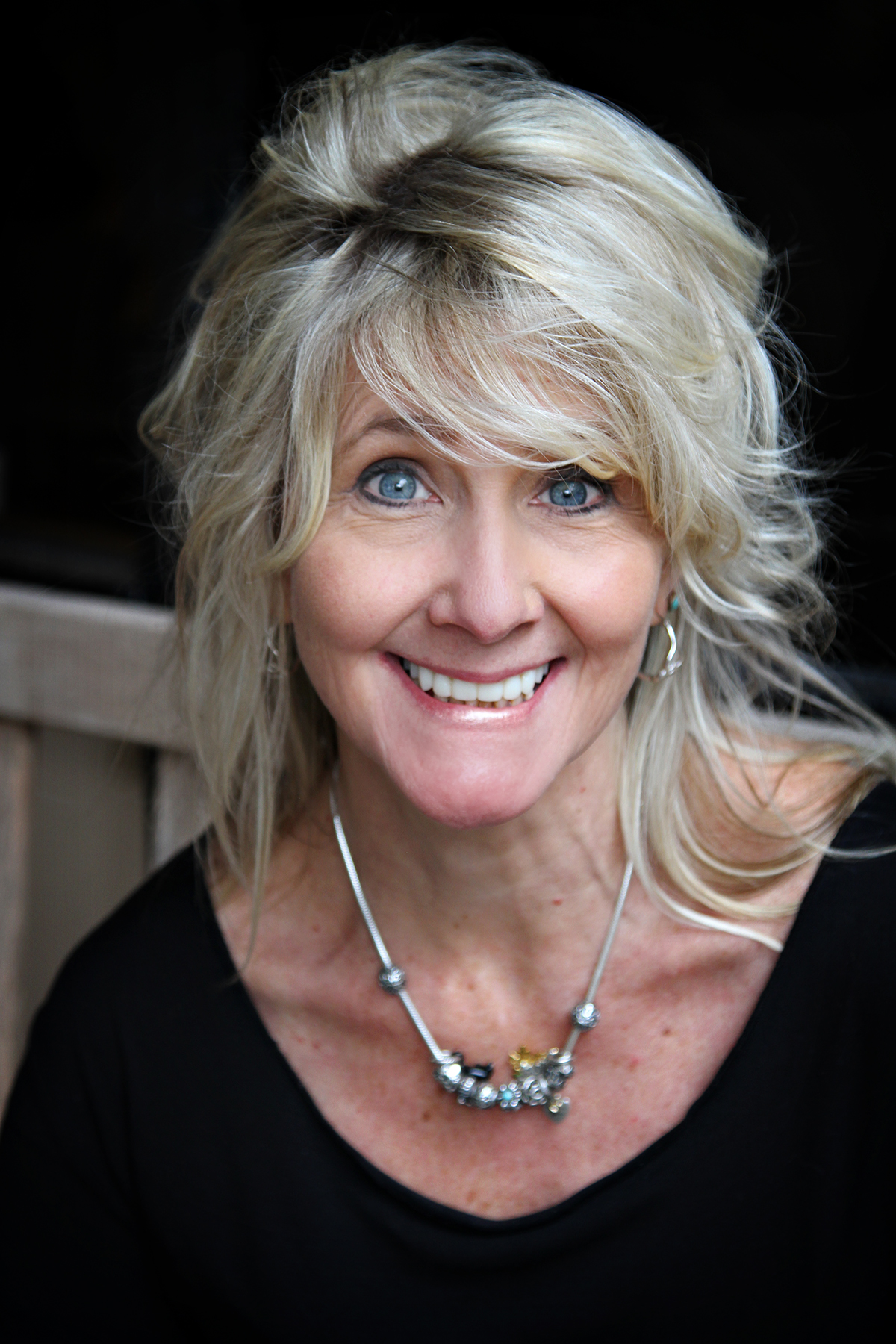
Annie Nardone is a lifelong bibliophile with a special devotion to the Inklings and medieval authors. She is a Fellow with the C.S. Lewis Institute and holds an M.A. in Cultural Apologetics from Houston Christian University. Annie is the Director of Visual Artists for The Cultivating Project and columnist for Cultivating Magazine. She is founding board member, managing editor, and author for the apologetics quarterly, An Unexpected Journal. Her writing can also be found as travel blogger for Clarendon Press U.K., with published poems at Calla Press and Poetica.
She holds a MA in Cultural Apologetics from Houston Christian University, and is a Fellow with the C.S. Lewis Institute. Annie writes for Cultivating, Literary Life, and Clarendon House Books, and is a managing editor and writer for An Unexpected Journal. Annie collaborated on three books in 2022, published by Square Halo Books and The Rabbit Room. She recently designed a curriculum detailing the intersection of theology, the arts, and history and is a Master Teacher for HSLDA. She resides in Florida with her Middle Earth/Narnia/Hogwarts-loving family, and an assemblage of sphynx cats and feline foundlings.

Add a comment
0 Comments