


My dad tells me that when I was about eighteen months old, I got croup, the coughing sickness that afflicts babies. Coughs turned me into a raspy human rattle.
While trying to cure Minnie May of the same sickness, Anne of Green Gables used ipecac syrup.[1] Our pediatrician tipped us off to a simpler remedy: steam. My dad carried me into the bathroom, turned on the shower, and stood outside the tub. Fluttering veils of moist, warm air filled the room, bathing our skin and smoothing out the phlegm in my throat so I could breathe.
I was too little to actually remember that bout of croup, but I do remember a later incident. I was four years old and taking a bath.
My mom had stepped out for a moment, and I decided that I desperately needed a hairbrush to brush my wet hair and pretend to be a mermaid. Dripping, I climbed up on the counter to get the hairbrush from the top shelf. I lost my balance and slipped right off the smooth white countertop, cracking my chin on the tile floor.
I don’t remember the pain, just some stinging, but my parents saw that the wound needed stitches. They picked me up, toweled me off, and dressed me in my white and yellow button-up pajamas. My dad drove me to the emergency room.
In my mind, I can still see the inside of our Dodge Chrysler panel-sided minivan and my feet in 101 Dalmatians slippers in front of me. I was blissfully, wholeheartedly happy. This whole episode had been tremendously exciting, I was getting lots of attention, and I was with my dad. I was always safe with my dad.
My deep trust in my parents is tied to thousands of memories like these.
They weren’t perfect. But their love was a steady, quiet rhythm in my days, like breathing.
When pondering the concept of trust, my mind keeps going back to rest. Trust and rest are not related etymologically,[2] but their one-syllable simplicity and sound give them a kinship.
Deep trust is restful. With the people and things you trust, you feel safe.
Almost three thousand years ago, a man stood before the walls of Jerusalem with a great army. His title was the Rabshakah, and he was the chief spokesperson for Sennacharib, king of Assyria. He must have felt like a lion with a mouse pinned under his paw. Assyria was a mighty empire that had just conquered the ten tribes of Israel and the fortified cities of Judah (2 Kings 17; 18.13).
The Rabshakeh’s speech to Judah’s King Hezekiah’s messengers and the people sitting on the wall is a masterwork of psychological warfare. He attacks the city’s foundation: its trust.
And the Rabshakeh said to them, “Say to Hezekiah, ‘Thus says the great king, the king of Assyria: On what do you rest this trust of yours?” (2 Kings 18.19)
The Rabshakeh uses the word “trust” seven times in a speech that mocks Judah’s reliance on its ally, Egypt, on King Hezekiah, and most of all, on the Lord God. Maliciously, he uses the language of Judah to call the people on the wall to abandon their God and king and retreat to a fruitful land in Assyria. This serpentine invitation would lure them away from the Lord’s covenant gift, the Promised Land.
When Hezekiah hears the message, he tears his clothes. But his next action is a relief to readers weary of the parade of kings who “did evil in the eyes of the Lord”—including Ahaz, Hezekiah’s father (2 Kings 16). Hezekiah goes to the house of the Lord and sends for Isaiah the prophet for help.
This call for help confirms what we learned about Hezekiah earlier in this chapter:
[Hezekiah] trusted in the LORD, the God of Israel, so that there was none like him among all the kings of Judah after him, nor among those who were before him. (2 Kings 18.5-6)
Hezekiah renewed Judah’s trust in the Lord: the Creator and Father who breathed life into Adam and made Israel his treasured possession. The Lord repays that trust, as He always does. First, a simple political dispute draws the Assyrian army away. When they return, the Lord strikes down 185,000 of them—without Judah raising a weapon. (2 Kings 19.6-37).
Last year, I walked uphill through a forest murmuring with birdsong and green life at the golden hour. I ducked under branches and scrutinized every dead leaf. My dad and I had lost his small, light-gray drone when its batteries died and it crashed somewhere off the path.
Anyone who has been lost in the woods can verify that away from well-beaten trails marked with colorful blazes or cairns of stacked rocks, everything looks the same. Tree bark comes in muted shades of brown tinted with red or gray. Fallen deciduous leaves are brown and crinkly. Evergreens are a somber green. Dead trees lie quietly under green moss. Ground cover like blueberry bushes or lily-of-the-valley are identical.
With the drone’s batteries dead, we couldn’t even activate fail-safes like making it flash and beep. But we did have precise coordinates, a sun setting in the west, and a compass app.
God has been very kind to our family when it comes to lost things: contact lenses, keys, and even the ruby from a ring once. He answered our prayers again. Following my compass app and the drone’s last known coordinates, we found it fallen between two dead trees, and carried it back in triumph.
Later, I was Googling the earth’s magnetic field to research a story idea and discovered something alarming: the magnetic north is moving. The geographic North Pole remains at the top of the world; the magnetic north that attracts compass needles has been wandering in the northern reaches of Canada for the last few centuries. It’s currently en route to Siberia.
“Wait a minute,” my sister said when I told her. “People use compasses to navigate! How do they keep everything accurate if the North Pole is moving?”
“Oh,” I said, as I imagined military campaign planners, off-trail backpackers, vacationing families, and cruise ships wandering around in circles. “Uh—the stars. They probably triangulate their coordinates by the stars.”
“But the stars move, too!” she protested.
Yes, the stars move, too. If the magnetic north is moving, and so are the stars, how do we orient?
The boring explanation is that British and American scientists have to release a new edition of the World Magnetic Model (WMM), the tool GPS and navigation systems use, every five years.[3] But the question stayed with me: how do you orient yourself when the North Pole is moving?
Who can we trust when everything looks the same, or is always changing?
My trust in my parents and my trust in the unseen God, my divine parent, grew together at first, like intertwined tree roots near water. My mom and dad translated God’s love to me through their own.
But somewhere along the way, Scripture took hold of me. The Lord’s mighty tenderness to His people, like Hezekiah, wrote itself into my bones. I began to understand that my parents could not heal, protect, or guide me in every danger, but He could.
I’ve been through a few trackless wastes in adulthood: seasons that felt like navigating through a pathless wood. In those dark valleys or doldrums, renewing trust in my Father was an everyday choice, a rhythm like inhaling and exhaling.
What would it look like if I let go of all my fear and desire for control and allowed that trust to define me? I wonder if it would look like navigating by a compass among trees that all look the same. It could look like Hezekiah falling on his face before the Lord. It could look like a little girl sitting happily in a car, indifferent to a bleeding chin, just thrilled to spend time with her dad. It could look like the steady rhythm of healthy lungs and a heart that feels safe enough to rest.

Editor’s note: All scripture excerpts are taken from the English Standard Version translation.
1. See chapter 18 of L. M. Montgomery’s Anne of Green Gables (Bantam Books, 1992).
2. See the discussion of “trust” on etymology.com.
3. See “Earth’s Magnetic North Pole Is Shifting Toward Siberia and Raising Questions About Unusual Movement” by Ella Jeffries, January 24, 2025.
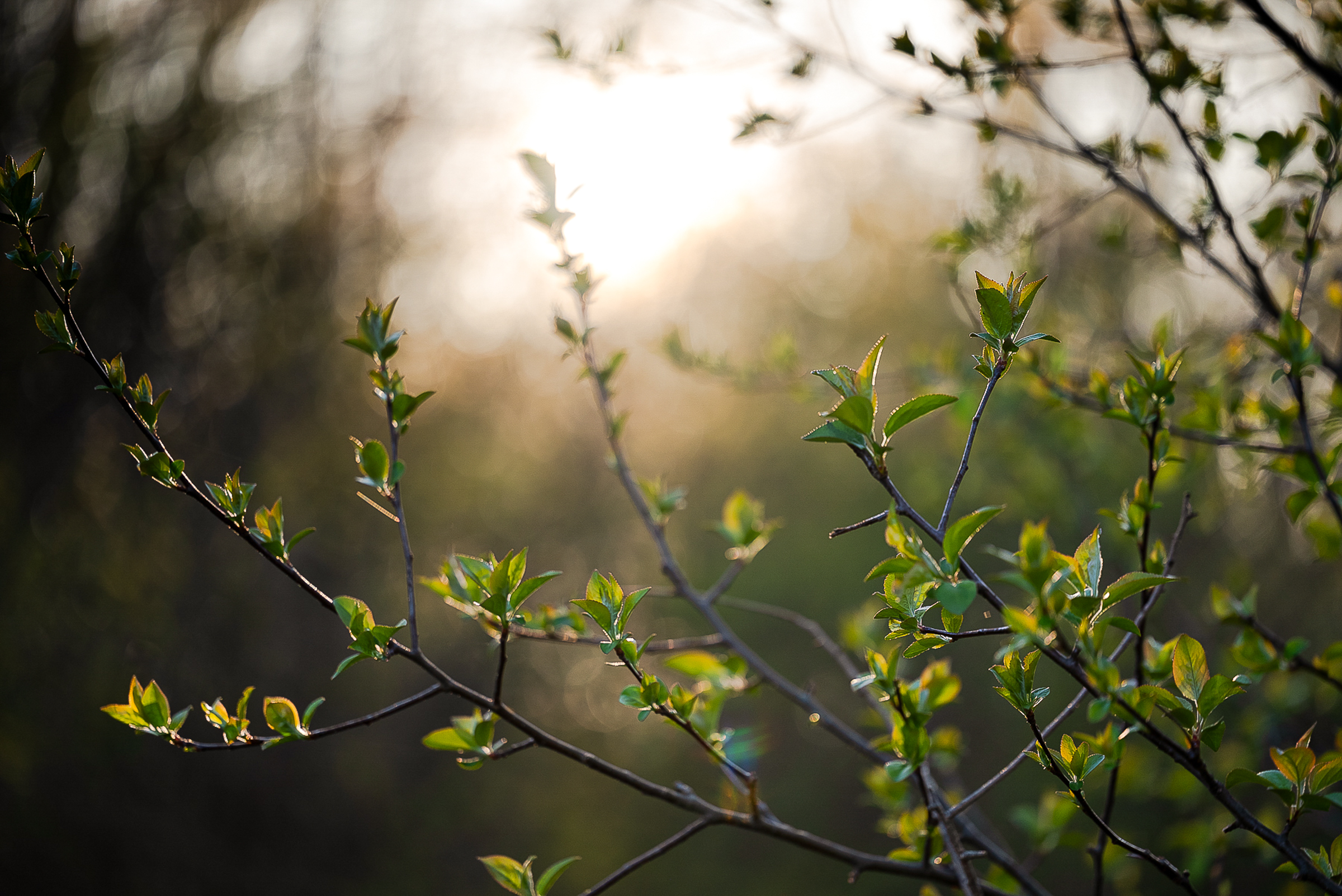
The featured image, “Reaching Up,” is courtesy of Julie Jablonski and is used with her kind permission for Cultivating.
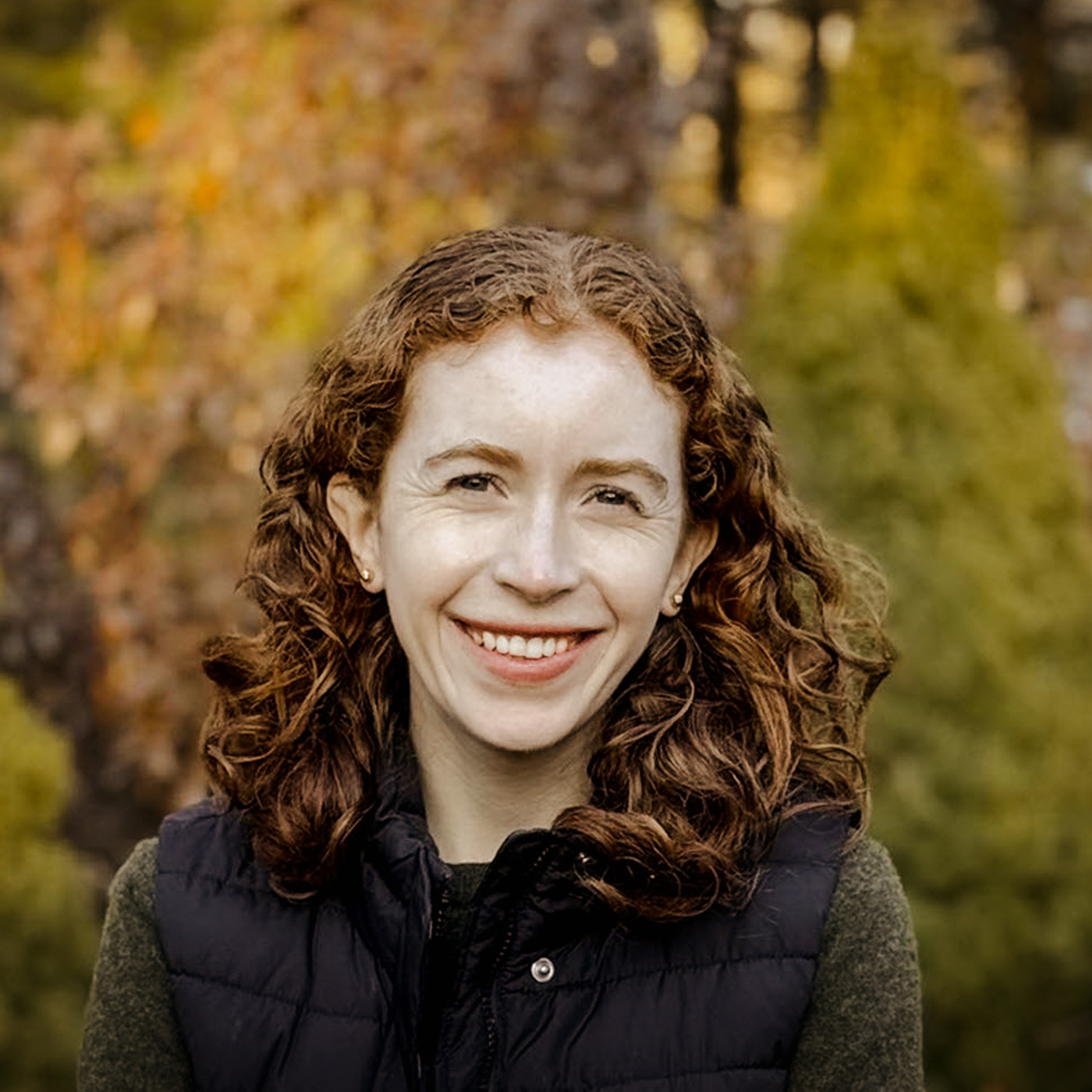
Alicia Pollard is a follower of Christ, storyteller, and Bible teacher. She lives in New England, where she loves hiking through forests and climbing mountains. She studied Theology and the Arts at the University of St. Andrews in Scotland, where she explored the Deadly Sins of Sloth and Anger, the relationship between faith and imagination, and the works of C.S. Lewis, J.R.R. Tolkien, and T.S. Eliot. In the past, she hosted a podcast, “Leaf by Lantern,” which explored retelling fairy tales through the lens of Scripture.
In her spare time, Alicia loves spending time with family; reading fantasy, mysteries, and sci-fi; writing fiction; and sometimes photographing mossy rocks or the sun rising over lakes. She blogs about yearning, books, and glimpses of transcendence at aliciapollard.com.

It was a refreshing pleasure reading this, Alicia. I am presently on a God-inspired mission to renew childlike wonder and your essay is helpful required reading to that end.
Thank you,
Denise
Thank you, Denise!!