


The Cultivating Gardener is a column designed to engage all garden lovers, regardless of skill or experience, as we glimpse, together, the deep tenderness of God hidden in our own backyards. In this column you will find reflections, resources and tips designed to help you expand your vision of what it means to cultivate your own plot of land. As you pursue this good and holy work of garden-tending, my hope is that you will find your own heart lovingly tended by the Great Gardener of both our soils and our souls.

Maybe it was all the historical fiction I read as a child, or the field trips with my dad to plantation homes dotted along the East Coast, but for whatever reason, I grew up longing to live in an historic home. And at last, in my early thirties, that longing was enfleshed; my husband and I are now renting a small, lower-level portion of a magnificent old mansion (circa 1917). And we lucked out—our backyard is full of lilac bushes.
After settling into our new space, I eagerly turned my attention to researching the history of the property, delving into all the resources my local library could provide.
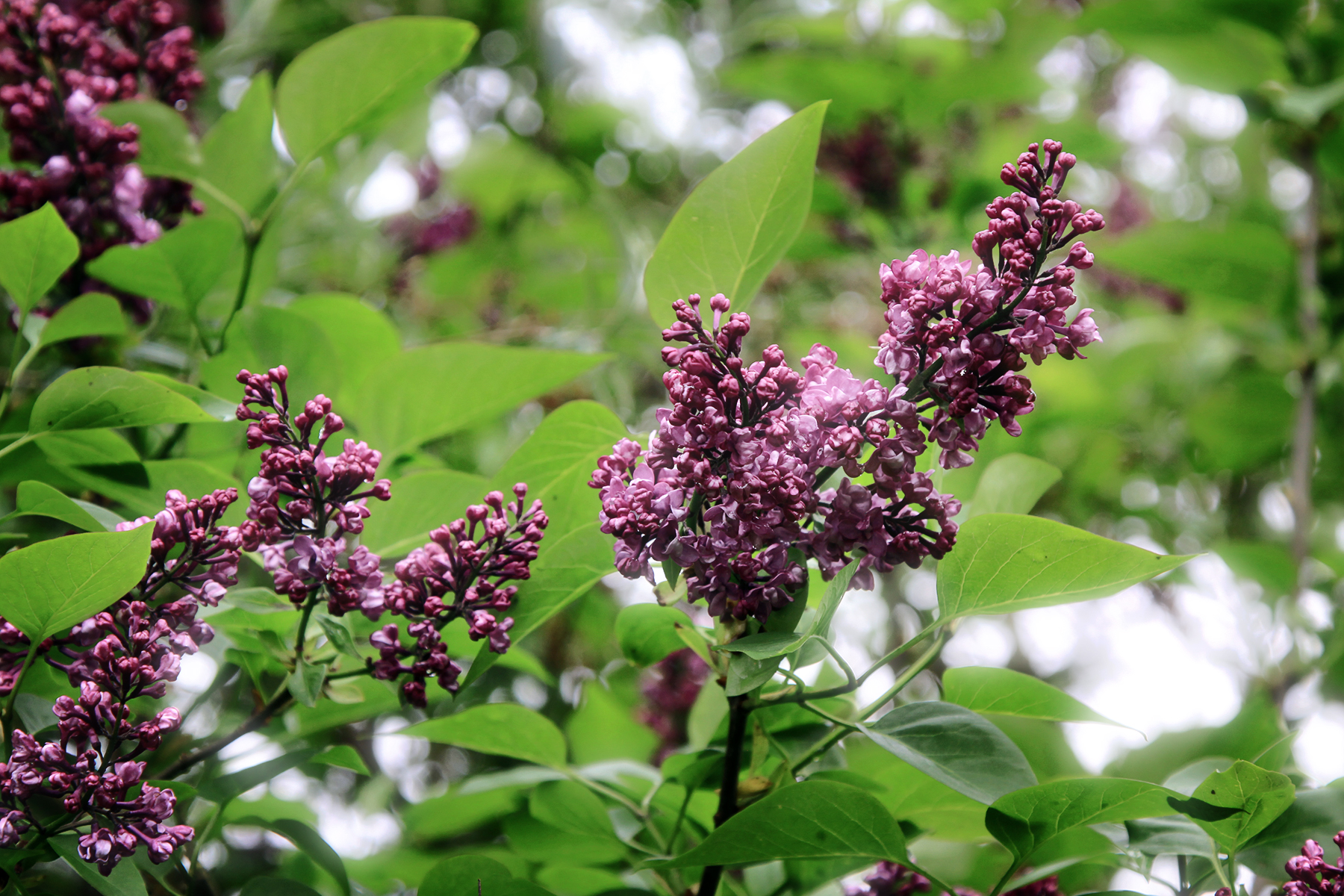
As an avid anthophile, (my new favorite vocabulary word for “flower lover”) you can imagine my delight when I discovered that, years ago, this mansion was well regarded for its expansive gardens. The plot of land originally purchased for this home was triple the size of the average city residential plot. The result was a sprawling Tudor-style home surrounded by an acre of gardens. And one hundred or so years later, massive lilac bushes still billow in the breeze behind our house, hedging it in a border of glory.
The first time I saw the lilacs bloom, it took my breath away. I had always loved lilacs, but a whole backyard boasting their magnificence? A dream.
My husband and I host a monthly cocktail party in our home, and in the beginning of our third summer on the property, our gathering happened to fall on the week the lilacs were in full bloom. Our tradition of opening our home to the community every month is now a decade running, and over those years, my husband has begun creating his own spin on common cocktails. His idea this time? A lilac martini with a garnish of lilacs from our garden. Brilliant.
As the amateur “taste-tester” for my amateur bartender husband, (we should get ourselves better titles) I always sample my husband’s concoctions before we serve them to our guests.
I smiled, watching him place the delicate little purple blossom across the surface of the transparent liquid. When he handed me the martini glass, I thought I knew what to expect, but when I took the first sip, I was transported. The sweet floral essence of the lilac-infused gin married flawlessly with the perfumed fragrance eddying from the flower. In the span of a single instant, time rolled back upon itself like a wheel, and I felt as if I had sipped the nectar of eternity; the linear tug of time that orders our days vanished as past and present conjoined in strange, ethereal union.
Here I was, tasting, touching and partaking of a molecular beauty lovingly grown here, in my backyard, nearly a century ago. I was staggered.
People I never knew—the owners, their gardener, and the caretakers of the estate—were each somehow present in that first sip, strangely embodied in that transparent liquid. I gazed down at the little flower, floating happily along the rim. What had just happened? I lifted my gaze out to the yard beyond the porch and saw the lilac bushes calmly presenting their coned majesty to the bees, the butterflies and … me.
We served that cocktail at our gathering, and it was a crowd favorite. I smiled as I looked around the room that night at both strangers and friends chattering happily in our living room. The laughter, the delight, and the conversation were the product of community reveling in one another’s company and in the sensuous liquid in their glasses.
I silently marveled at the realization that this lilac martini was simultaneously a new creation and an old one, comingling in a single instant that transcended time itself. To this day, it bewilders me that the work-worn hands that planted these lilac shrubs had no foreknowledge of the young couple who, generations later, would make their home within the walls of this mansion, throw a cocktail party, and partake of a piece of his handiwork.
It is an ancient art, co-creating with those who have gone before. Our experience with the lilacs isn’t an isolated one; building upon the mastery of another is what humans do—what they have always done. But we forget that it isn’t just the great deeds or the famous works of art that affect the generations to come. Rather, it is the faithfulness in the tiny (and often mundane) deeds that can make the biggest impact upon our futures. No act of faith is too small for the hand of God to bless it.
In one of her novels, George Eliot says this:
“For the growing good of the world is partly dependent on unhistoric acts; and that things are not so ill with you and me as they might have been, is half owing to the number who lived faithfully a hidden life, and rest in unvisited tombs.” [1]
I strive to continue cultivating the grounds of this old mansion by way of nurturing this little “great-granddaughter” garden. And though the lilacs are undoubtedly reaching their zenith (most don’t live longer than one hundred years), each summer I lovingly prune the twisted limbs that are too old to bear fruit, in faith that, however increasingly their output wanes, each blossom is an emblem of hope for the generations to come.
I’ve written before of this passage by author E.B. White, who, observing his wife, noted that each spring, with her paper, pencil, and seeds in hand, she would faithfully sit in her garden, “calmly plotting the resurrection.” [2]
Believing that goodness will persist requires acts of faithfulness from us. We can’t “believe” the world into a salvific proclamation of our hope. We need to take steps of our own to get it there, however small. But to do that, we must summon the courage to envision something better—something more edifying—something just a bit more beautiful than what we can see now.
I truly believe that whoever’s work-worn hands were responsible for the planting of our lilac bushes those many long decades ago (whether they knew it or not) were doing just that: plotting the resurrection.
The simple act of planting a flower, a shrub, a tree, or a garden is enfleshing an invisible faith—faith that life will emerge enrobed in a garb of green, declaring that resurrection is real and our hope is alive. As gardeners, we must be benefactors to the world to come.
The faithful labor of this mysterious gardener so many years ago had ramifications extending far into the future. Unwittingly, this sweaty, tired worker stirred my husband’s senses and stimulated his imagination. Propelled by the (good and holy) desire to foster fellowship in the fractured communities of the twenty-first century, my husband engendered a new beauty to serve the visitors to this property. Beauty—real beauty—never diminishes but builds upon itself in the presence of goodness and truth, and both my husband and the estate gardener were participants in this sacred process.
Perhaps it is overly sentimental, but I want to close with a note to my dear old garden predecessor:
To whoever you were and whoever you are now, my husband and I thank you. We bless you for your labor and praise you for your faithfulness in pursuing the gritty, difficult work of planting and caring for this garden. It is the seemingly small and simple acts of people like you—people who faithfully envision a future adorned with the ripples of resurrection, that the rest of us can offer odes of beauty, friendship, and hope … from something as simple as a glass.

[1] This quote is from George Elliot’s Middlemarch (Little, Brown and Co. Publishing) and was accessed via Google Books where the original citation also includes the word “the” before the word “rest.” In all my additional research, this seems to be a typo unique to this publication.
[2] E.B. White, introduction to Onward and Upward in the Garden, by Katharine S. White (New York Review Books).
The featured image is courtesy of Lancia E. Smith and is used with her glad permission for Cultivating.

A founding member of The Cultivating Project, Christina has been fascinated by beauty her whole life. Color, texture, pattern, fragrance, melody, light – all of the boundless ways in which creation shines – ignites her imagination, compelling her to create. Even as a wee sprite, Christina was dedicated to wordsmithing and sketching her way through its marvels in an attempt to capture, at least partially, the imprint of the Creator within it. But writing and drawing are not her only creative endeavors; several years ago she took on the laborious (but rewarding) task of nurturing a garden in the dismal soils of the Rocky Mountain foothills, and has eagerly employed her spade (alongside her pen) as a tool to cultivate and curate the beauty around her.
She has two little gardeners-in-training who embody all these marvels and more in their merry little faces. She and her husband Brian are the founders of the Anselm Society based in Colorado Springs, whose mission and calling is a renaissance of the Christian Imagination. She serves as the Director of the Anselm Society Arts Guild and her creative work can be found at LiveBeautiful on Substack and on Instagram.

Lovely prose Christina – I learned a new word to give to my wife – anthophile. Thank you for this quiet and thoughtful meditation.
Thank you, Roy! I’m so glad you like that word. Me too! I hope it delights your wife. 🙂