




The Cultivating Artist is a column that seeks to encourage and empower fellow makers. The work of an artist—that reach toward something beautiful—can feel daunting, especially at the beginning. Negative thoughts threaten to steal away sparkling possibilities. I’ve learned that by dwelling on thoughts that are lovely and true, I can fight discouragement and keep moving forward one brush stroke at a time. I want to help you fight and persevere in your work too. Here, I’ll be coming alongside you with encouragement and stories from my own life, reminding you that you’re not alone.

I held a wad of paper towels under my chin to catch the tears before they hit my painting. It was lying flat on the table—the final illustration for my book Lucilla and the Snarly Skein. Soon I’d be able to prop the painting up on my easel, but for now, it had to remain flat to prevent some of the watery paint from dripping.
As I dabbed tiny white stars onto the blue night sky, my vision blurred again and again. The tears just wouldn’t stop coming, and I was struck by the irony of it—putting the final touches on a joyful picture of freedom and hope while, in real life, despair pressed in on me.
A few hours before, my oldest daughter had run into my studio, visibly shaken. She handed me her phone and curled up on the worn velvet couch.
“Read it,” she said, turning her face away.
My heart dropped as I read the cruel words sent by a classmate. Why is it like this? I wondered for what felt like the thousandth time. Why this cruelty toward my daughter—my girl who has a heart for the lonely, the outcast, the needy?
Over the past year, I’d prayed for friends for her at school, but that hadn’t happened. I’d prayed for grace from teachers but had found very little. Week after week, as new heartaches stacked up, I continued illustrating the book I’d written about a girl who got tangled up in a knot too complicated for her to untie—a girl whose only hope of rescue was the King who commanded the stars.
My daughter needed rescuing. And thinking of it made this hopeful picture feel untrue.
One stubborn tear made it past the wad of paper towels and splashed recklessly onto the canvas below. I gasped and blotted it quickly, thankful it didn’t pull up the blue paint.
As I continued dotting stars onto the canvas, I thought of the words I’d written on the chalkboard in our kitchen.
“LOOK FOR GOD’S PROVISIONS!”
I’d written that exclamation after meditating on a particular account in scripture. My youngest daughter had erased the “L” so that now it said “OOK FOR GOD’S PROVISIONS!” She and her sister had laughed at how long it took me to notice the missing letter.
During that time, I’d been reading about Joseph. In my mind, I’d pictured him with wide frightened eyes, staring up out of the pit his brothers had savagely thrown him into. Surely he’d prayed for rescue. But instead he’d been sold into slavery. And then, right when it seemed like things were getting better, he’d been wrongly accused, thrown into prison, and forgotten.
One sentence had caught my attention as I read: “The Lord was with Joseph” (Genesis 39.3, 21 NASB). Joseph wasn’t rescued out of the pit the way he’d hoped and likely prayed, but the Lord was with him. He wasn’t treated fairly, but the Lord was with him. He was with him in the middle of the suffering—in the pit, in slavery, and in prison. And as I read back through the story, I could see God’s provisions weaving through it. They probably weren’t the answers to the exact prayers Joseph was praying, but God was with him, and His kindness was showing up in ways that might go unnoticed if Joseph wasn’t looking for them.
I painted the last few stars on the canvas, propped it up on the easel and took a step back. The little girl in the painting was finally free, stretching her arms out in joy. The unruly knot of yarn had been untangled and coiled up neatly.
I began calling to mind God’s provisions over the past year. This had become a habit—a way of seeing stars in the darkness. God had not yet given me the specific things I’d prayed for my daughter, but He had provided for her and for me daily, in lots of little and big ways. Above all, He had been with us. God—the One who commands the stars—was with us.
It’s hard to see clearly when heartache is blindingly near, and when repeated prayers are not answered the way I have in mind. But I’ve found that when I step back and look for His provisions, I do find them. And when I remember that His presence is the greatest provision, my hope is rekindled like an ember in the dark.

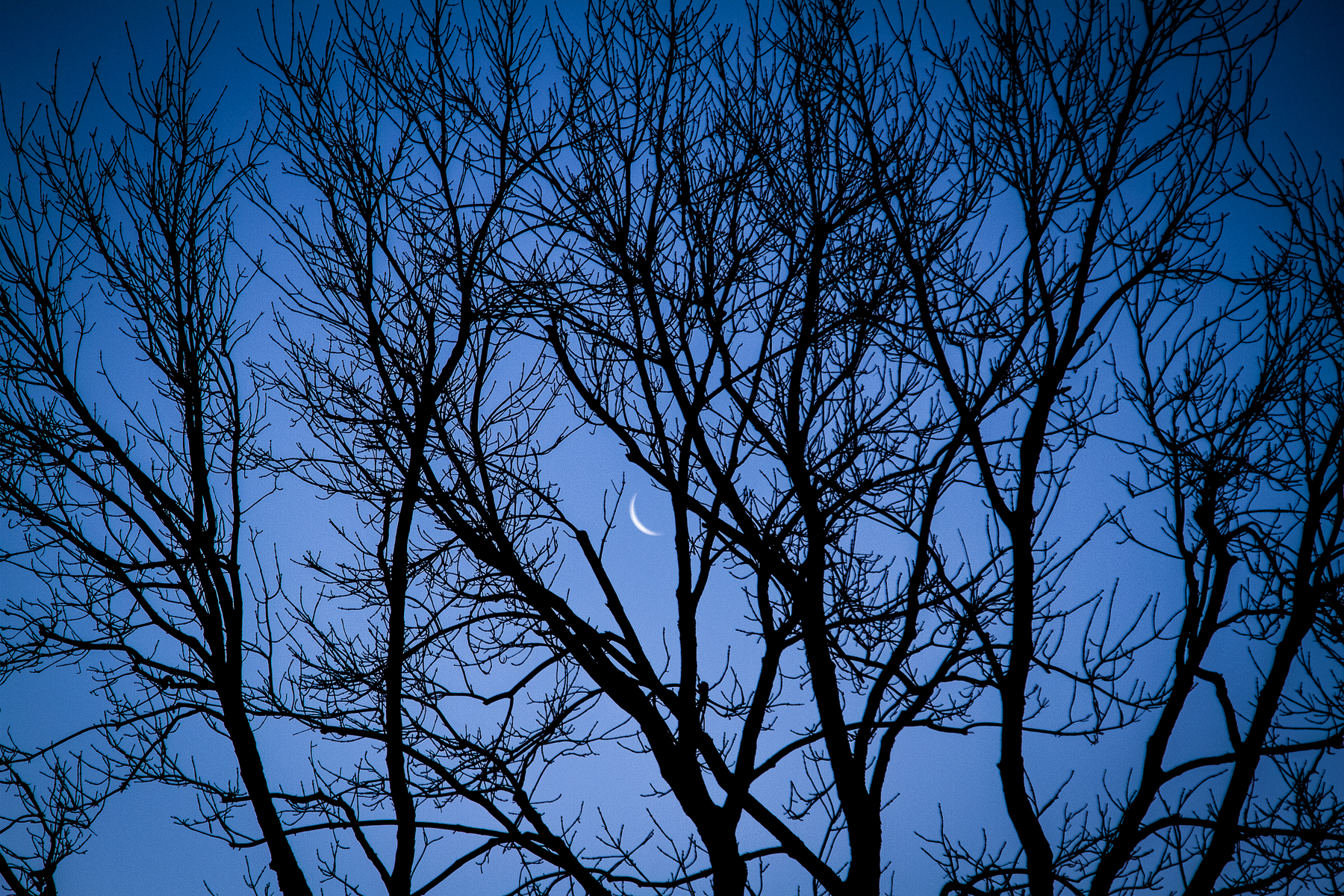
The featured image, “Sliver Moon and Winter Branches,” is courtesy of Lancia E. Smith and used with her glad permission for Cultivating.
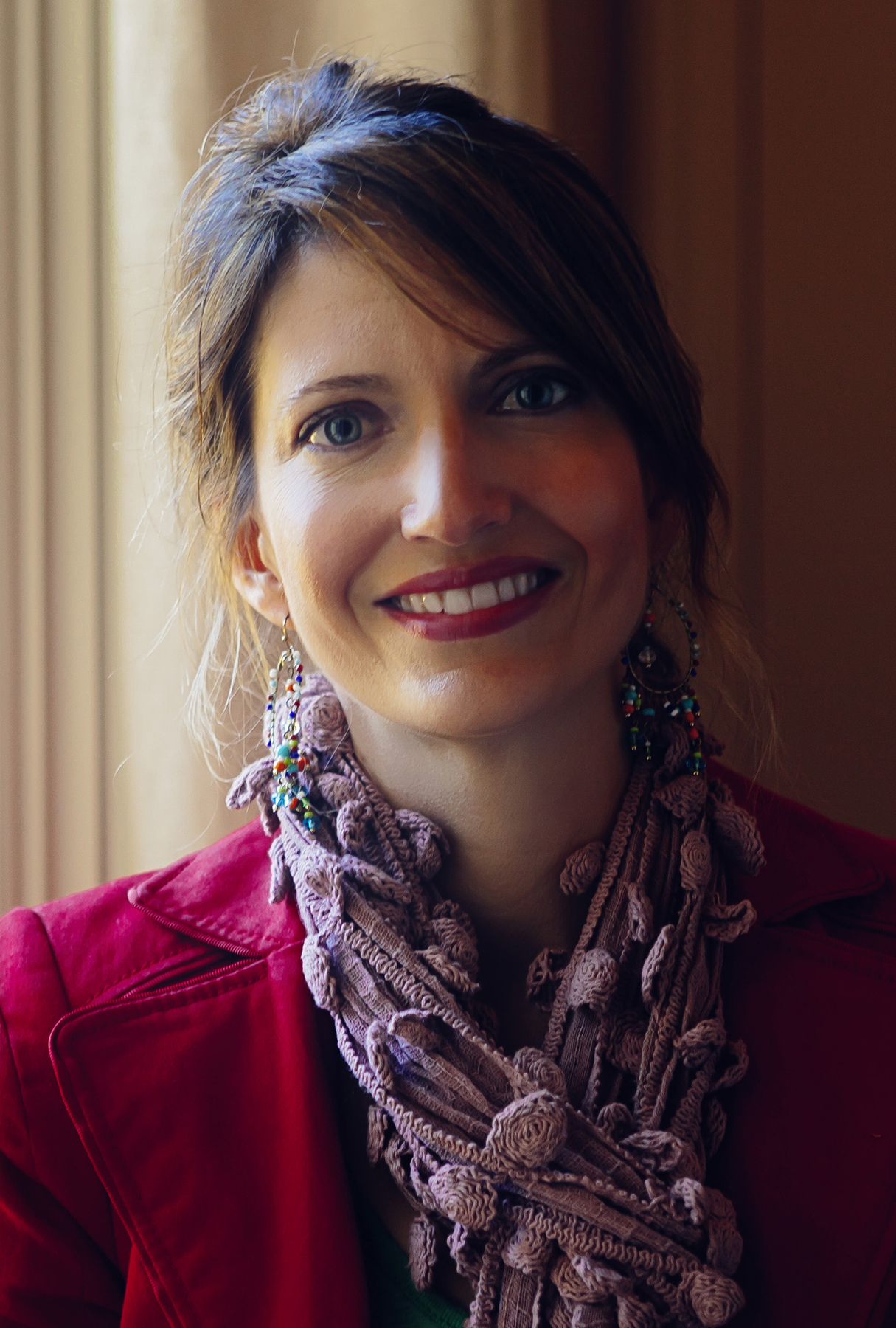
For Amy, it all starts with a story. As a child, fairytales and fantastic illustrations captivated her mind and sparked her imagination. All her art originates from the stories she writes. She sees her “story paintings” as windows that provide just enough to start the observer down the path but leave a little mystery to ignite their imagination.
Light shining out of the darkness is her favorite and most recurring theme. Amy, a columnist for Cultivating Magazine, believes that artwork that reflects goodness & truth can bring light into our lives and give us hope.
She enjoys a quiet life with her husband and two daughters, in a house full of treasured books and bright colors. A sleek, black cat and a nervous, brown rabbit keep her company each day while she paints.

Dear Amy,
Thank you, thank you for the insight here, borne out of looking for truth in the midst of heartache. I needed this today and will hold it close as I trust God to show His provisions to me too!